Overview
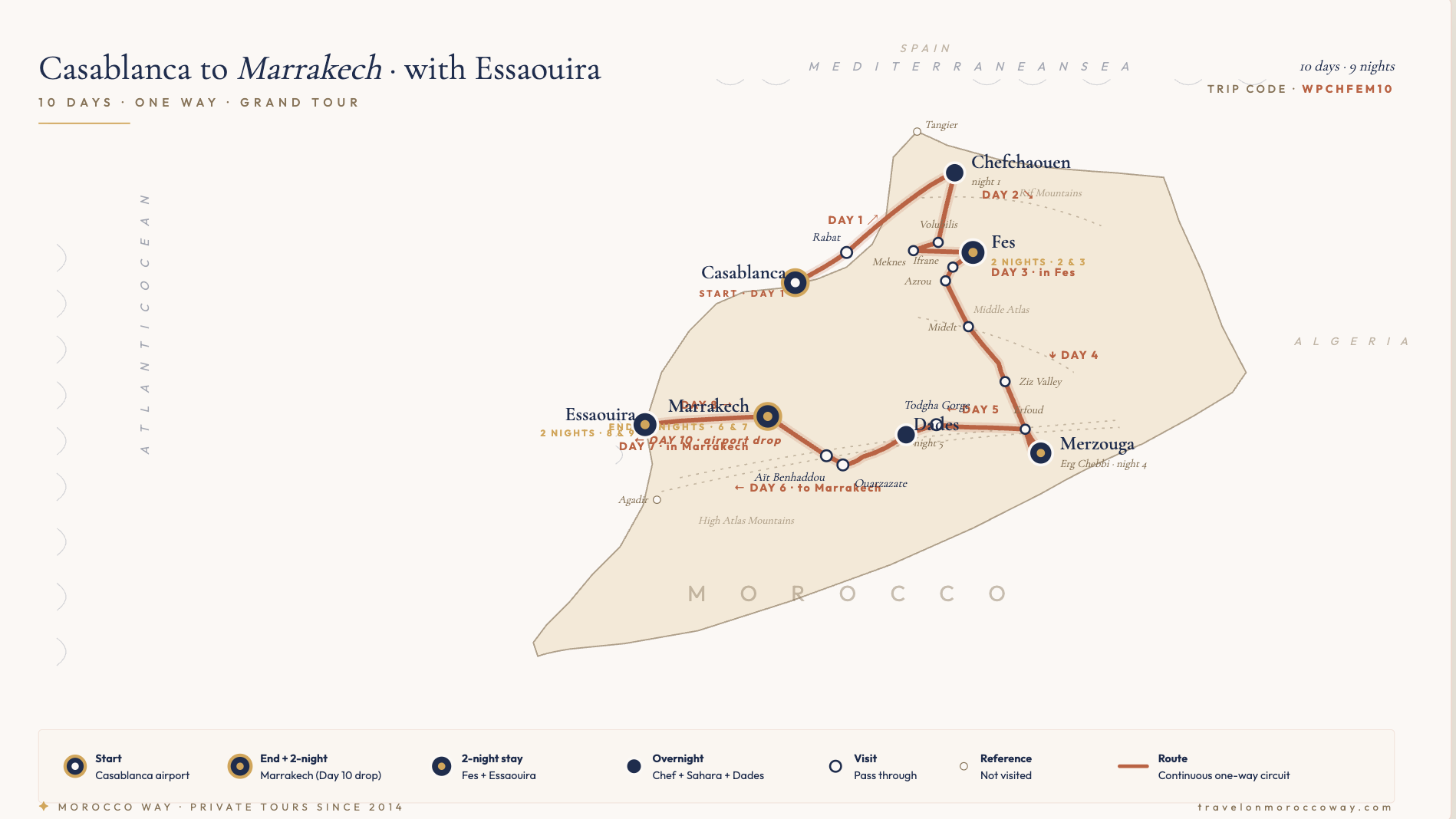
Ten days. Nine nights. Casablanca to Marrakech, the long way — through every Morocco icon, then a slow finish on the Atlantic coast in Essaouira before the easy final drive back to Marrakech for your flight home.
This is the catalogue's most comprehensive trip. It is the only Morocco Way product that combines Casablanca entry (where most international flights land), the full grand tour with both Chefchaouen and Fes, the Sahara, the kasbah road, two proper nights in Marrakech, two coastal nights in Essaouira, and Marrakech departure (where most travellers want to fly out). Other operators sell variations of this trip, but the geography we use puts the demanding driving in the middle and ends gentle on the coast — the pacing competitors miss.
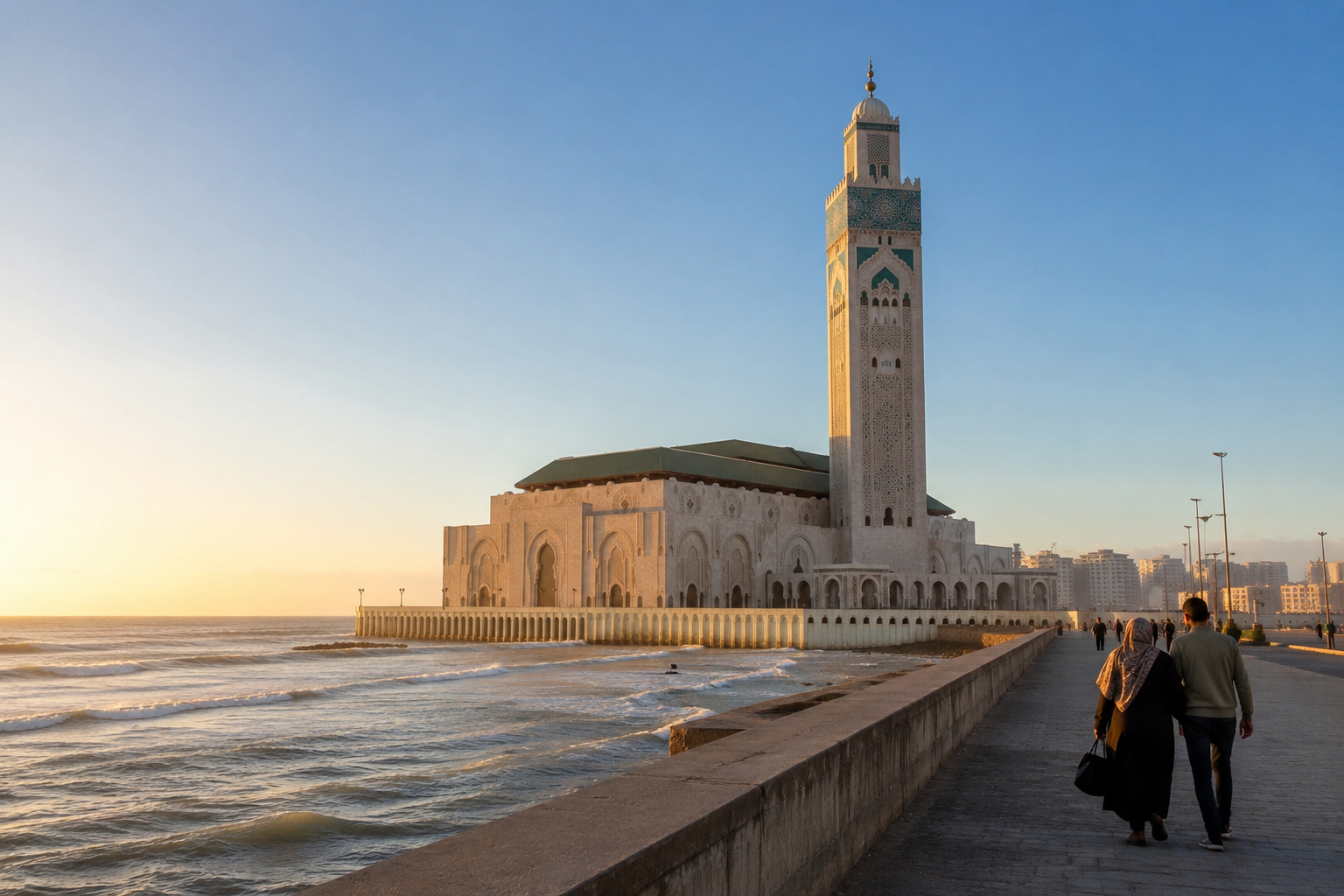
Day 1 is your arrival. We pick you up from Casablanca-Mohammed V airport (CMN) whenever your flight lands. If you arrive early, we visit the Hassan II Mosque (one of the largest mosques in the world, with a 210-metre minaret rising directly above the Atlantic) and stop in Rabat (Hassan Tower, Mausoleum of Mohammed V, Kasbah of the Udayas). Then north into the Rif Mountains to Chefchaouen for your first night.
Day 2 is the imperial corridor. A morning in the blue medina before 10:00 AM (best photography light), then south via Volubilis (third-century Roman mosaics, UNESCO-listed) and Meknes (Bab Mansour, Hri es-Souani granaries) to Fes for two nights.
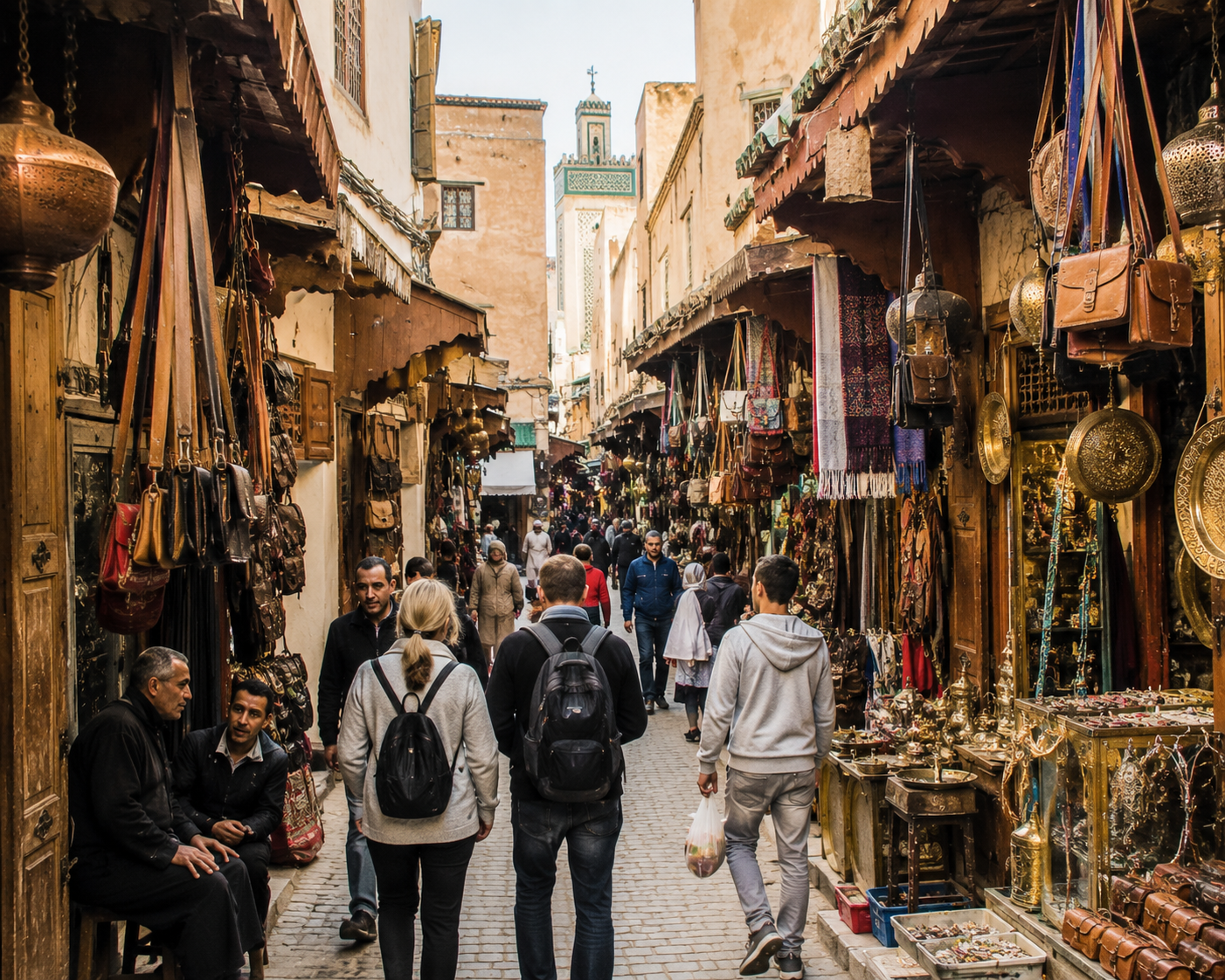
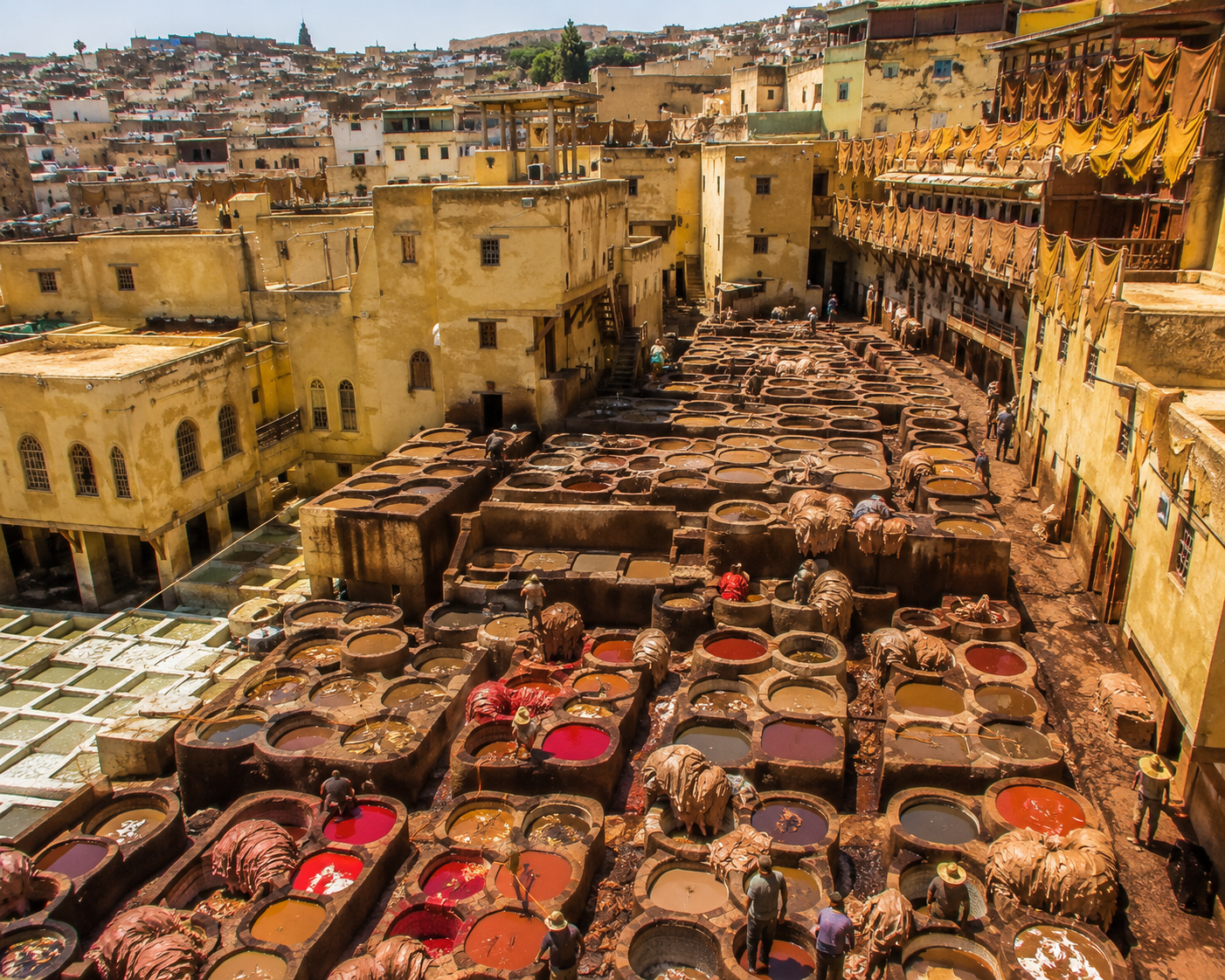
Day 3 is on foot inside Fes. We include a licensed local medina guide who walks you through the largest car-free urban area on earth: the Bou Inania madrasa, Al Quaraouiyine (the world's oldest continuously operating university, founded 859 AD), the Chouara tannery, the workshops of Place Seffarine.
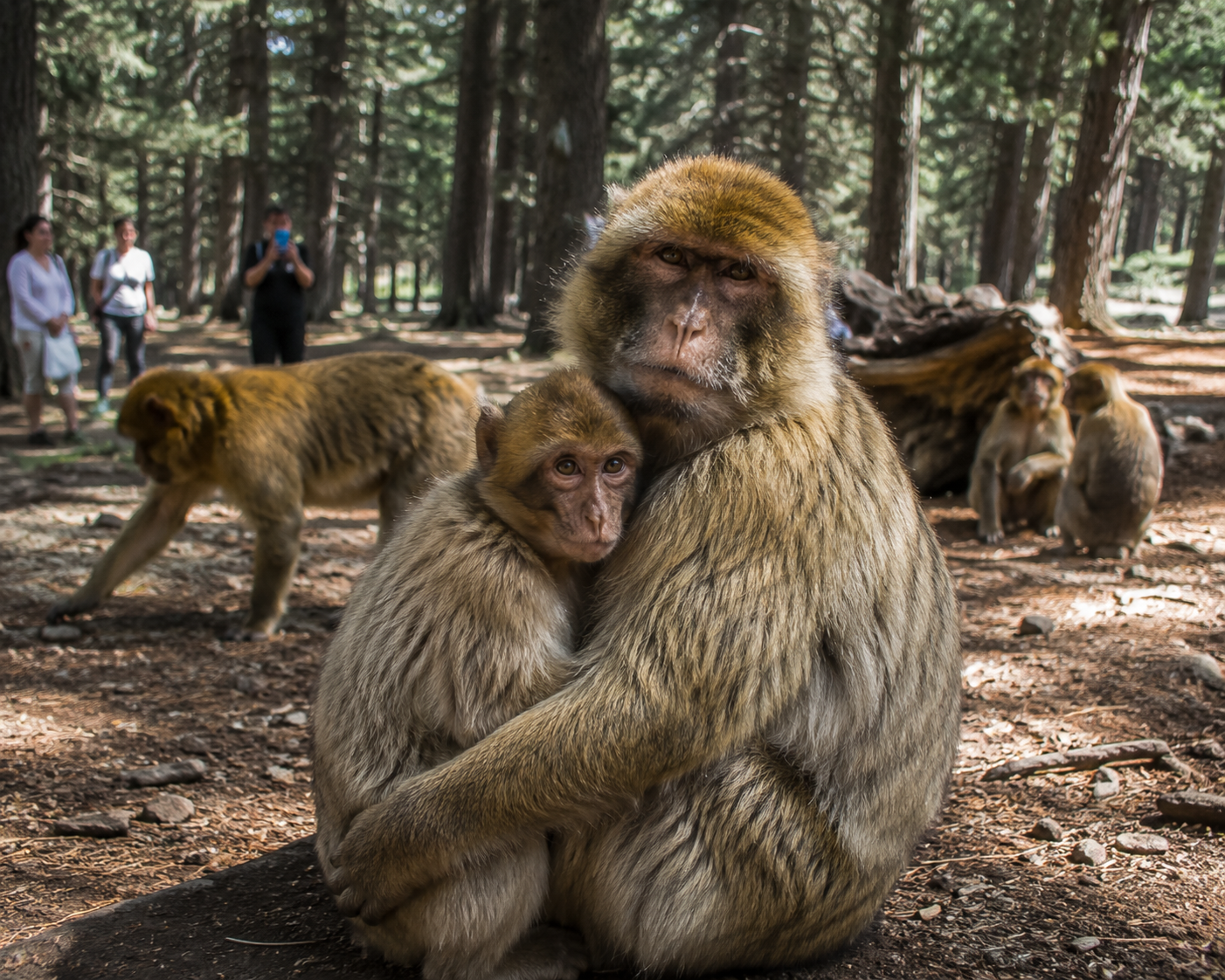
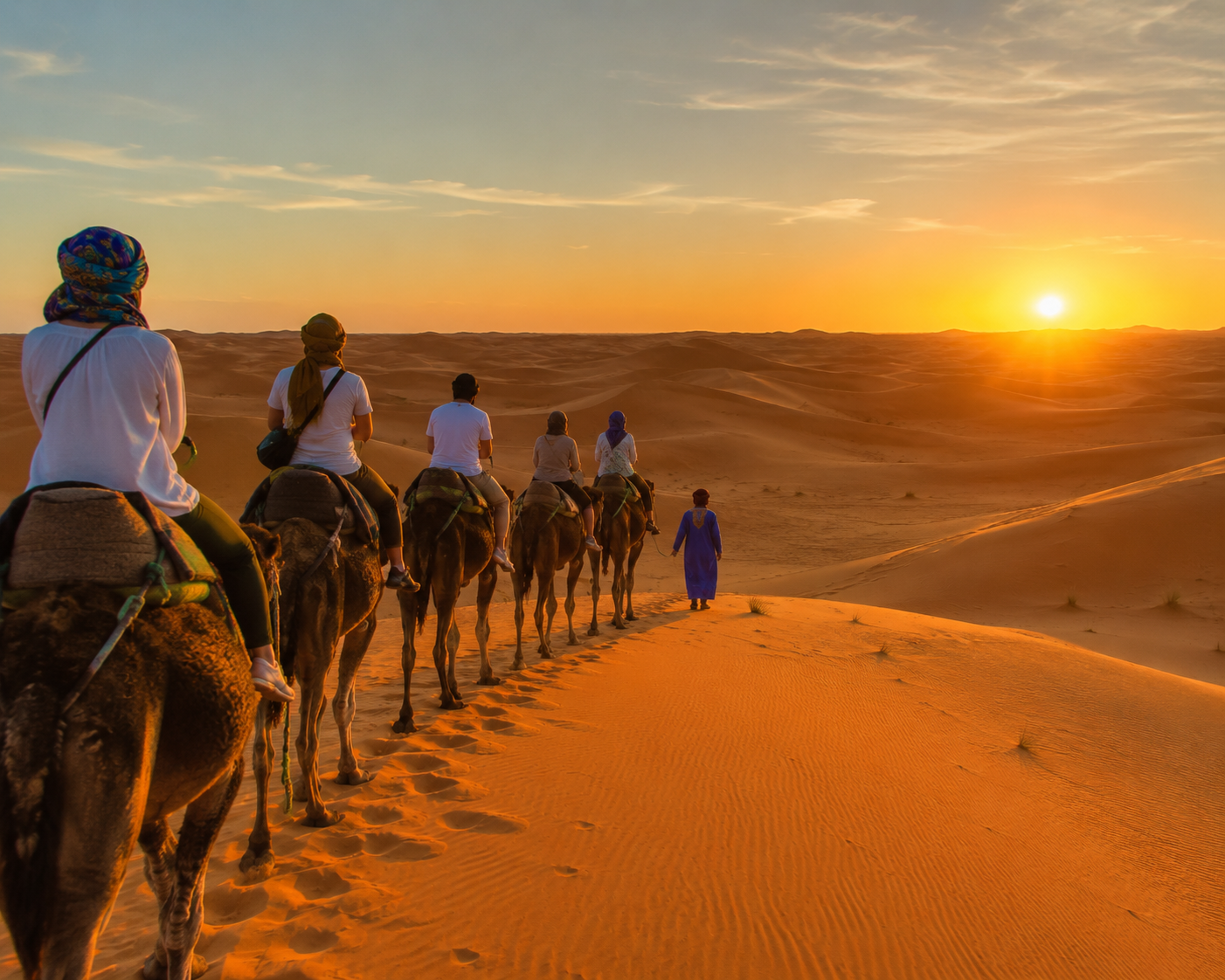
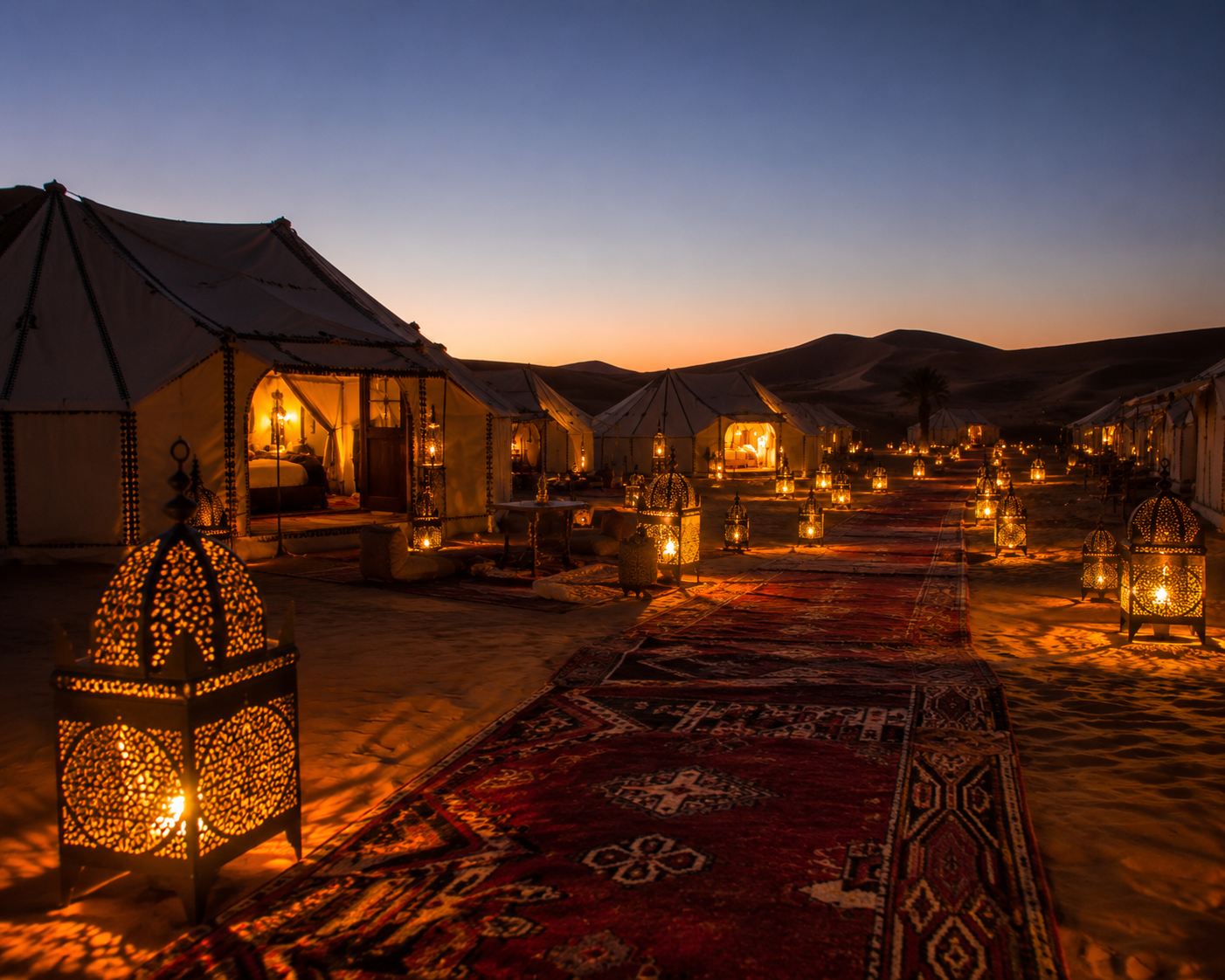
Day 4 is the long climb south to the Sahara — through Ifrane, the cedar forest near Azrou (wild Barbary macaques), Midelt for lunch, the Ziz Valley, Erfoud, and finally Merzouga for camel trek and a night in a Berber camp with a private en-suite tent.
Day 5 is the western drive: Sahara sunrise, then west via Rissani, the Todgha Gorge (limestone walls 300 metres high), and a riad night in the Dades Valley. Day 6 is the iconic Road of a Thousand Kasbahs through Skoura, Ouarzazate, the UNESCO village of Aït Benhaddou (Gladiator, Game of Thrones), the Tizi n'Tichka pass at 2,260 metres, and into Marrakech for two nights.
Day 7 is yours in Marrakech — Jemaa el-Fnaa, the Bahia Palace, the Majorelle Garden, the souks. Optional licensed local guide on request ($60-120 per party). Day 8 is the coast: a 3-hour drive west to Essaouira through the argan forests, with a stop at a women's argan oil cooperative if you want one. Lunch is grilled fish at the harbour stalls. Sunset on the eighteenth-century Skala ramparts. Two nights here.
Day 9 is yours in Essaouira — wander the medina, walk the long beach (kitesurfing optional, May–September is the season), eat well, do nothing. Day 10 is the easy 3-hour return to Marrakech-Menara airport for your flight home.
Everything is private. Your driver-guide is yours alone. Your Toyota Land Cruiser is yours alone. Your tent in the desert is yours alone. We adjust each day to suit your pace.
Best for: travellers flying into Casa with two full weeks who want every Morocco icon plus a proper coastal recovery. Honeymooners, families with older children, photographers, friend groups, first-time travellers who want to see the country properly.
Not the right fit if: you have less than 9 days for touring (consider our 8-day WPCHFMC8 round trip or our 5-day WPCMM5 entry product). Or if you cannot do the Day 4 long drive (8 hours from Fes to the Sahara — the geography doesn't fold). For travellers who'd rather fly into Marrakech, our 10-day WPMFCEM10 covers the same ground in a Marrakech round-trip shape.
Hakim founded Morocco Way in 2014 with one rule: every guide is born in the region they show you. That has not changed. Your driver-guide is from the south. Your Fes medina guide grew up inside that medina. Your Casablanca airport pickup is by someone who knows the terminal you're walking out of, in your language, before you've even cleared customs. Your Essaouira recommendations come from someone who knows which fish stall on the harbour grills the catch best.
Day by Day
Welcome to Morocco. We meet you at Casablanca-Mohammed V airport (CMN) whenever your flight lands. Your driver-guide will be holding a sign with your name in arrivals.
Day 1 timing flexes around your arrival. If you land before 11:00 AM, we head into Casablanca first for the Hassan II Mosque — completed in 1993, one of the largest mosques in the world, with a 210-metre minaret rising directly above the Atlantic. The interior is open to non-Muslims for guided visits in English (entry around 130 MAD per person, paid on the day). The marble floor, the cedar ceiling, the sliding roof above the prayer hall — this is the contemporary Morocco that travellers don't expect.
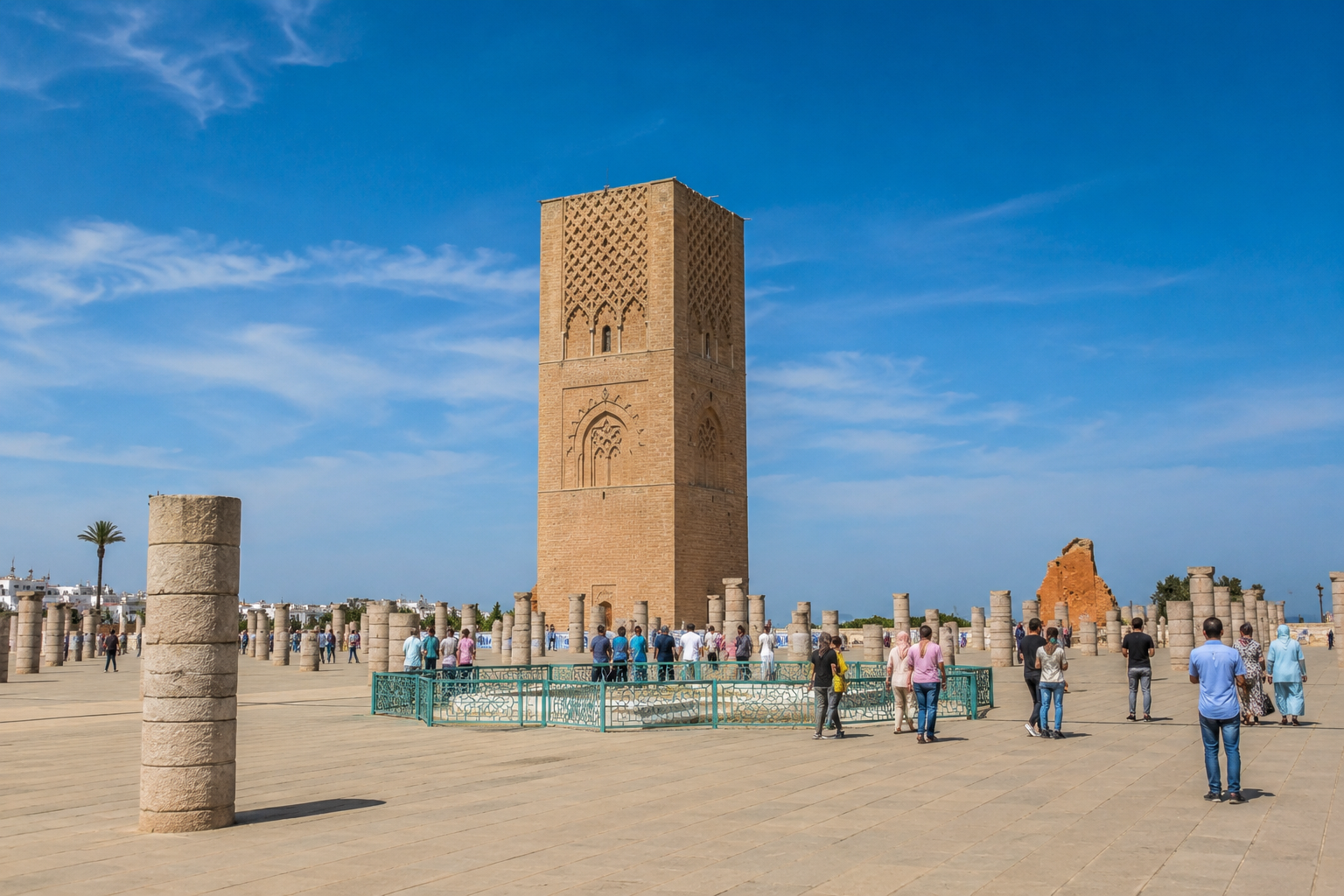
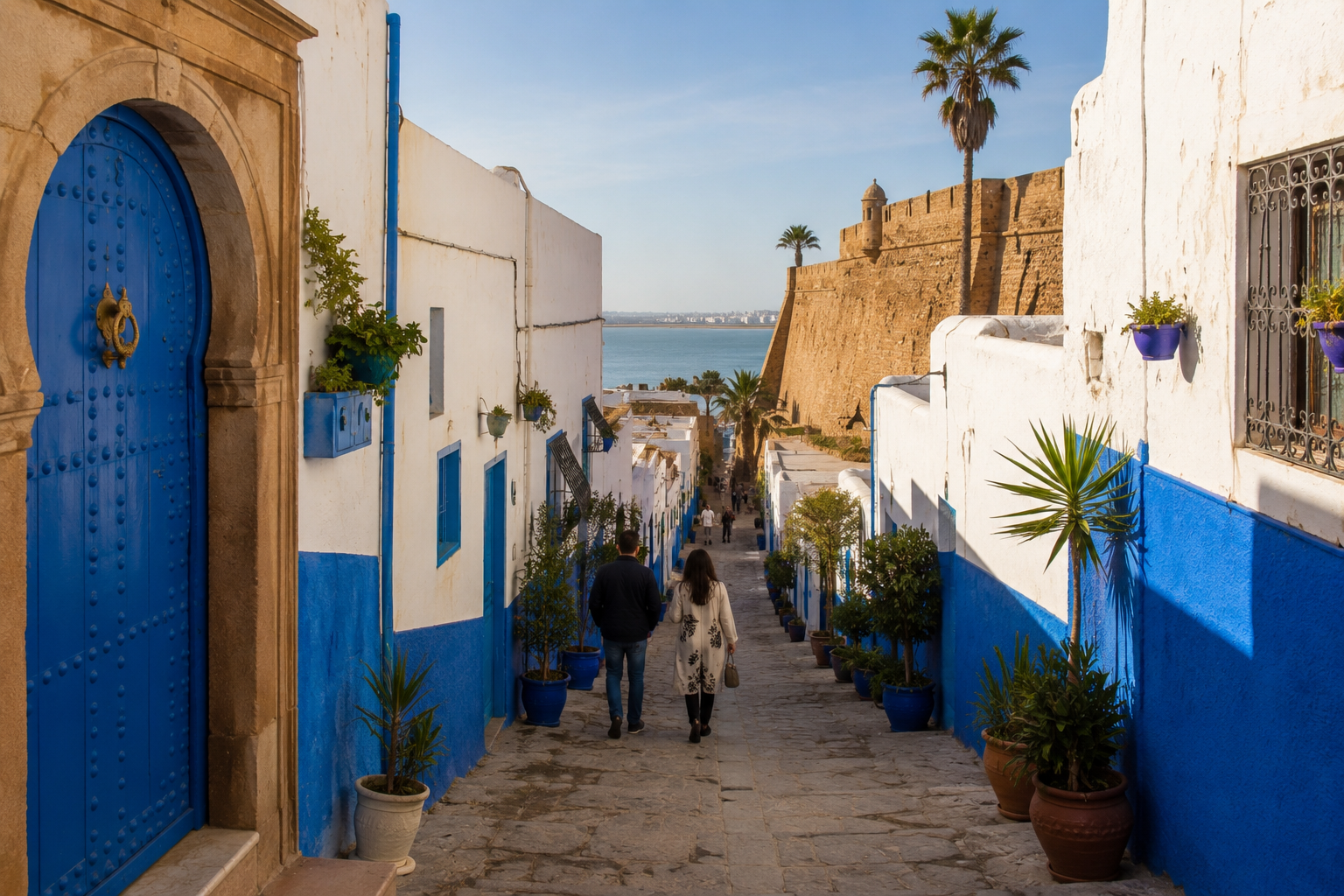
We drive north along the Atlantic coast highway to Rabat — Morocco's political capital, with a quieter pace than Casa or Marrakech. We walk the Kasbah of the Udayas (twelfth-century, Andalusian-influenced gardens, Atlantic views) and see the Hassan Tower (an unfinished twelfth-century minaret beside the Mausoleum of Mohammed V).
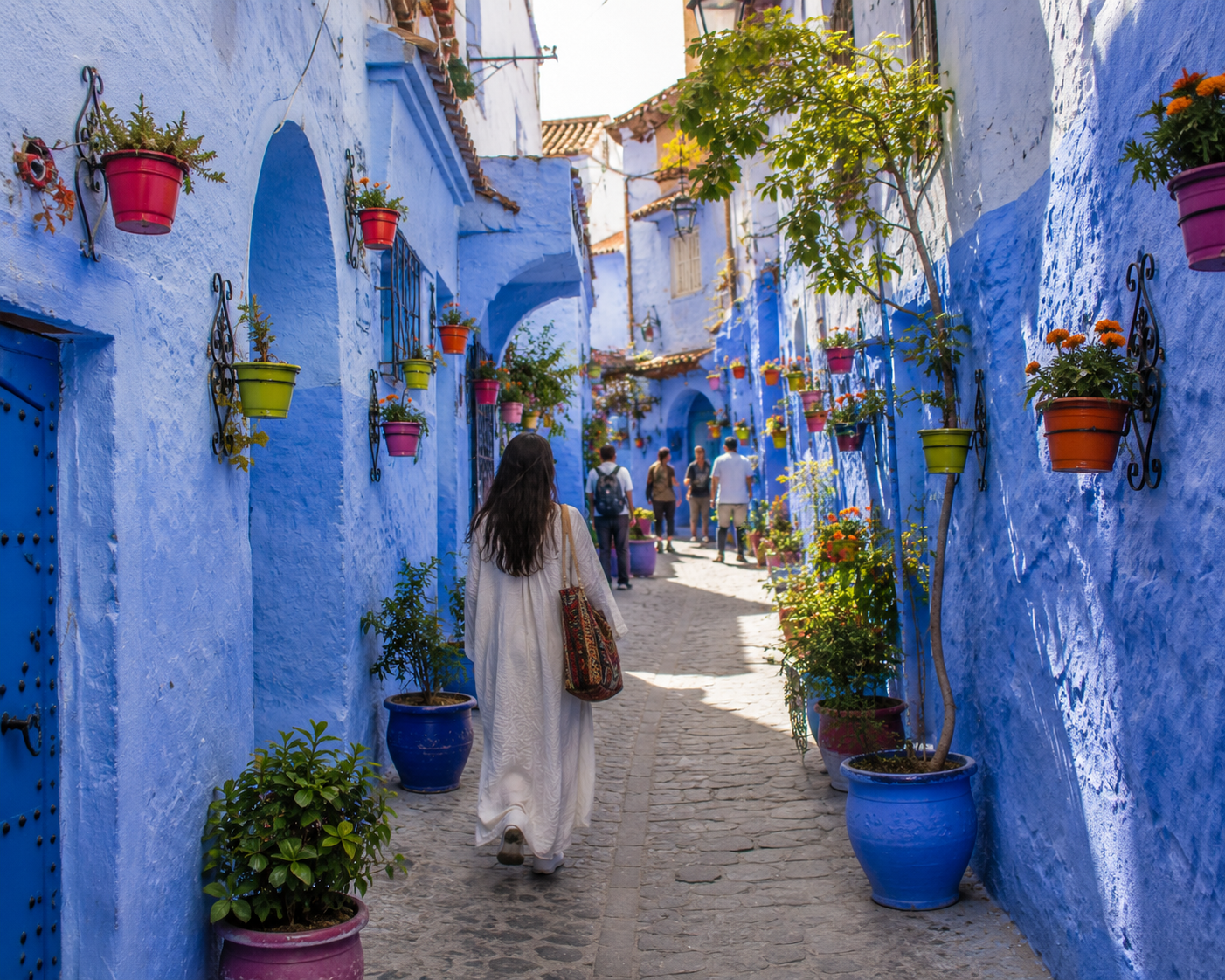
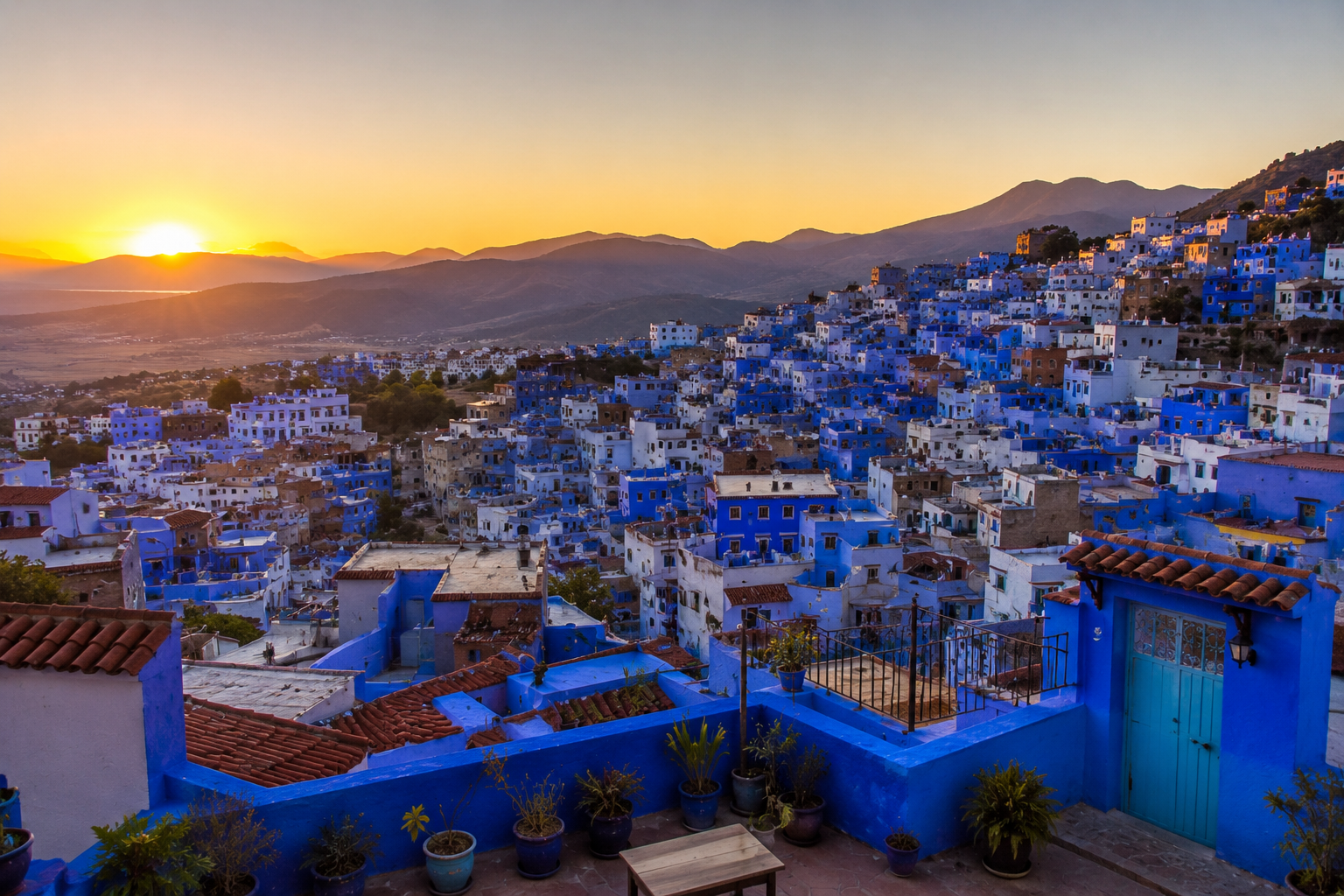
The afternoon is the climb north into the Rif Mountains. Chefchaouen sits at 600 metres in a fold of the Rif, painted blue from the alleys to the doorways. We arrive in the late afternoon. Your riad sits inside the medina; the walk in from the gate is short.
You spend the night in a traditional riad inside the Chefchaouen medina with an en-suite room. Dinner at the riad or on a rooftop nearby is included.
Note: if your flight arrives after 6:00 PM, we shorten Day 1 to just the airport pickup and drive to Chefchaouen, skipping Rabat. We can fit the Hassan II Mosque on Day 10 if your flight from Marrakech allows the time. Tell us your flight number when booking and we'll plan accordingly.
The blue medina is best photographed before 10:00 AM, when the light is soft and the day-trip groups have not yet arrived from Tangier. We start with a slow morning — coffee on a rooftop, a walk through the Outa el Hammam square (the centre of the medina, with the kasbah beside it), the alleys around Ras el Maa where the geraniums hang above the doorways. Two hours is enough to leave with the photographs you came for.
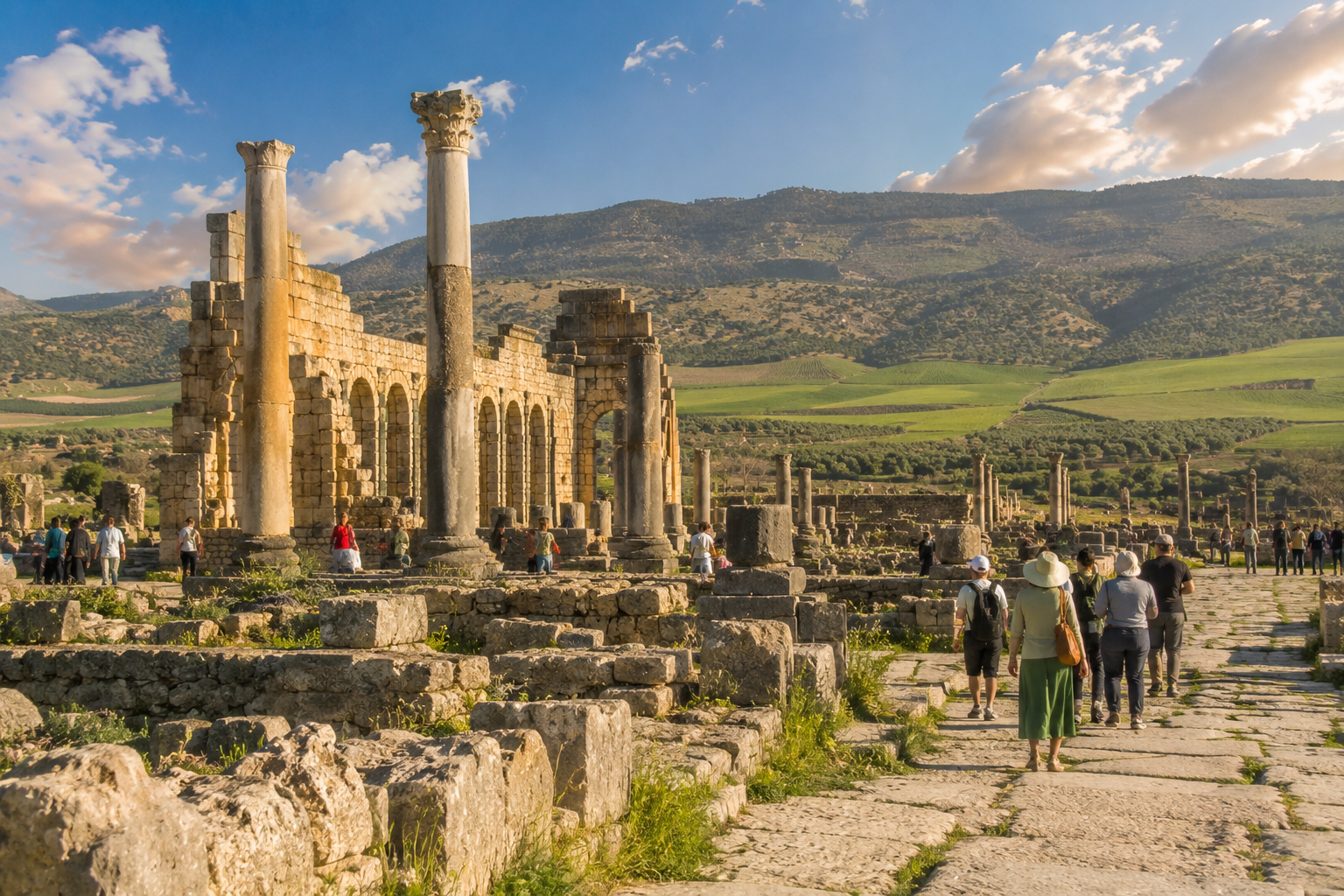
By late morning we leave Chefchaouen and drive south. The first stop is Volubilis — Morocco's best-preserved Roman ruins, UNESCO-listed, third century AD at peak. The mosaics are still in the floor: Orpheus playing the lyre, the labours of Hercules, the chariot of Bacchus. The site is open and uncrowded; you walk where Roman officials walked. We allow about ninety minutes (entry 90 MAD per person).
Lunch is in Meknes, the imperial city built by Moulay Ismail in the seventeenth century. We walk the Bab Mansour gateway (the most ornate gate in Morocco, finished in 1732), Place el-Hedim, and — if you want — the Hri es-Souani, Moulay Ismail's colossal underground granary built to feed twelve thousand horses.
By late afternoon we arrive in Fes. Your riad sits inside the medina. The walk in from the gate is short, but the alleys are narrow — your driver-guide will hand you off at the riad door, and a porter will help with your luggage if needed.
You spend the night (and the next) in a traditional riad inside the Fes medina. Breakfast at the Chefchaouen riad and lunch in Meknes (your choice — we'll suggest) are included; dinner in Fes is at the riad rooftop or a nearby spot we recommend.
Today is on foot, with a licensed Fes medina guide who has grown up inside it. The medina is the largest car-free urban area on earth and one of the most intricate. You will not navigate it without help. You will get help.
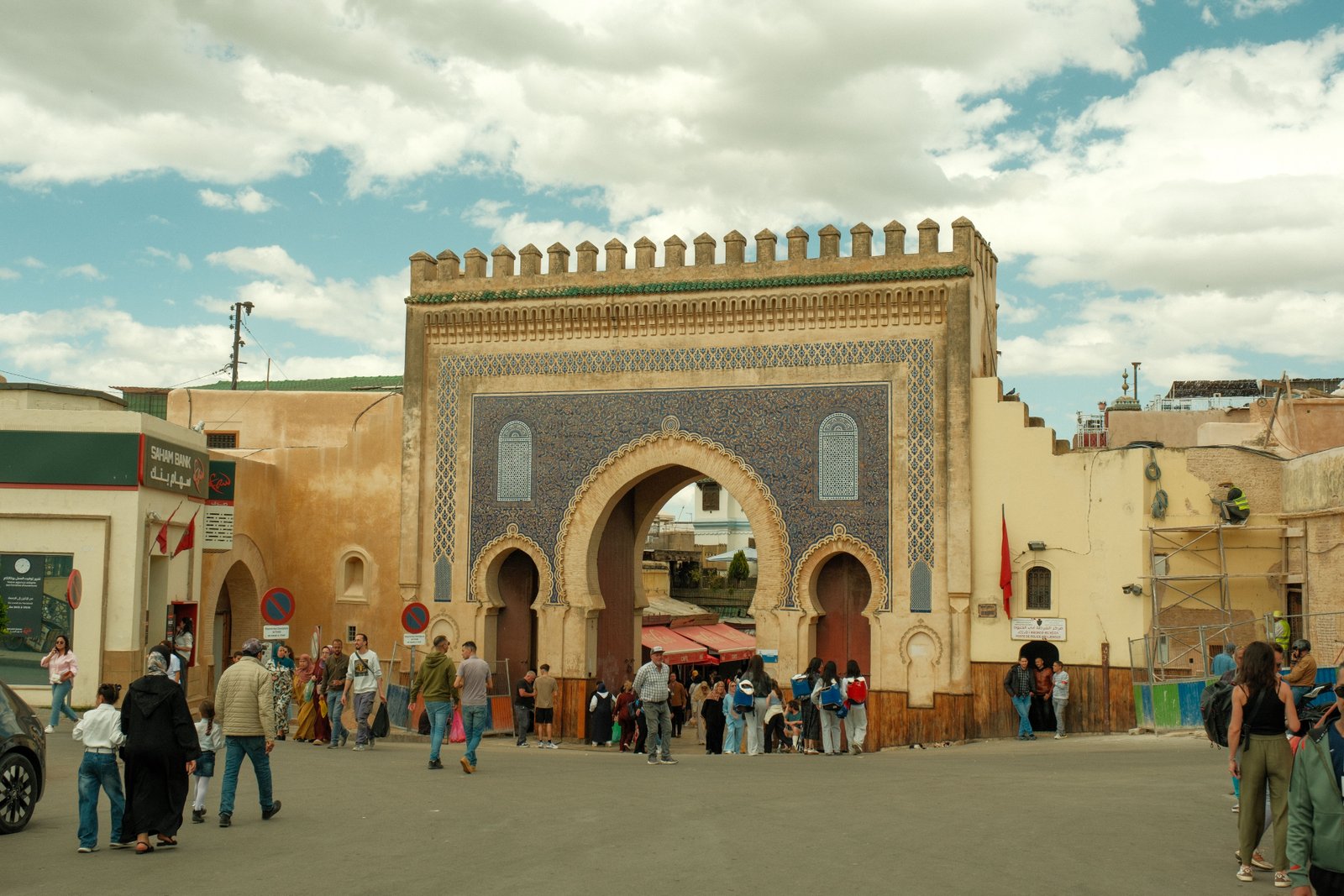
The morning starts with the Bab Boujloud (the Blue Gate) and weaves through to the Bou Inania madrasa — fourteenth-century, still working, with carved cedar and zellij tile that takes time to read. From there to Al Quaraouiyine, founded in 859 AD by Fatima al-Fihri and the world's oldest continuously operating university and library. Non-Muslims cannot enter the prayer hall but we can see the courtyards.
By late morning you are at the Chouara tannery — the medieval leather-dyeing pits that have looked the way they look for nine hundred years. We hand you a sprig of mint to hold to your nose; you will need it. The view from the leather shop terraces above is the photograph everyone has seen.
Lunch is in a riad restaurant your guide knows. After lunch, the smaller workshops: the metalworkers of the Place Seffarine, the woodturners, the henna market, the Attarine spice souk. The Royal Palace exterior in the late afternoon — the brass doors are a working postcard. We end at the rooftop of one of the riads or at a café terrace overlooking the medina, in time for sunset over Fes.
You spend a second night in your Fes riad. Breakfast is at the riad; lunch is at your guide's choice. Dinner is at your own choice — we recommend a couple of options nearby.
This is the long day. We tell you that honestly because the desert is genuinely far from Fes and there is no shortcut. We collect you at 7:30 AM (a little earlier in winter for daylight).
The first stop is Ifrane, twenty minutes off the Fes road — a strange, immaculate alpine town built by the French in the 1930s as a hill station, with stone-and-timber chalets and a famous stone lion sculpture. It is genuinely cooler here, often markedly so. A short stop, twenty to thirty minutes.
From Ifrane the road climbs into the cedar forest near Azrou — North Africa's largest cedar forest, with trees over 400 years old. Wild Barbary macaques live here, around 5,000 of them. We stop on a quiet road, not the bus-tour pull-in. Please do not feed them; we will explain why when we arrive.
Lunch is in Midelt, the apple capital of Morocco, sitting in the saddle between the Middle and High Atlas. The afternoon descent through the Tizi n'Talghamt pass and into the Ziz Valley is the visual highlight of Day 4 — a green river of date palm oasis cut into red sandstone cliffs, running for nearly fifty kilometres.
From there a long, mostly straight drive across the desert plain through Errachidia and Erfoud (the fossil town), and then the dunes appear on the horizon. We arrive at the edge of Erg Chebbi in the late afternoon and switch from the vehicle to the camel. The trek into the dunes takes about an hour. If you would rather not ride a camel, we drive you to camp by 4×4 — same camp, no negotiation needed.
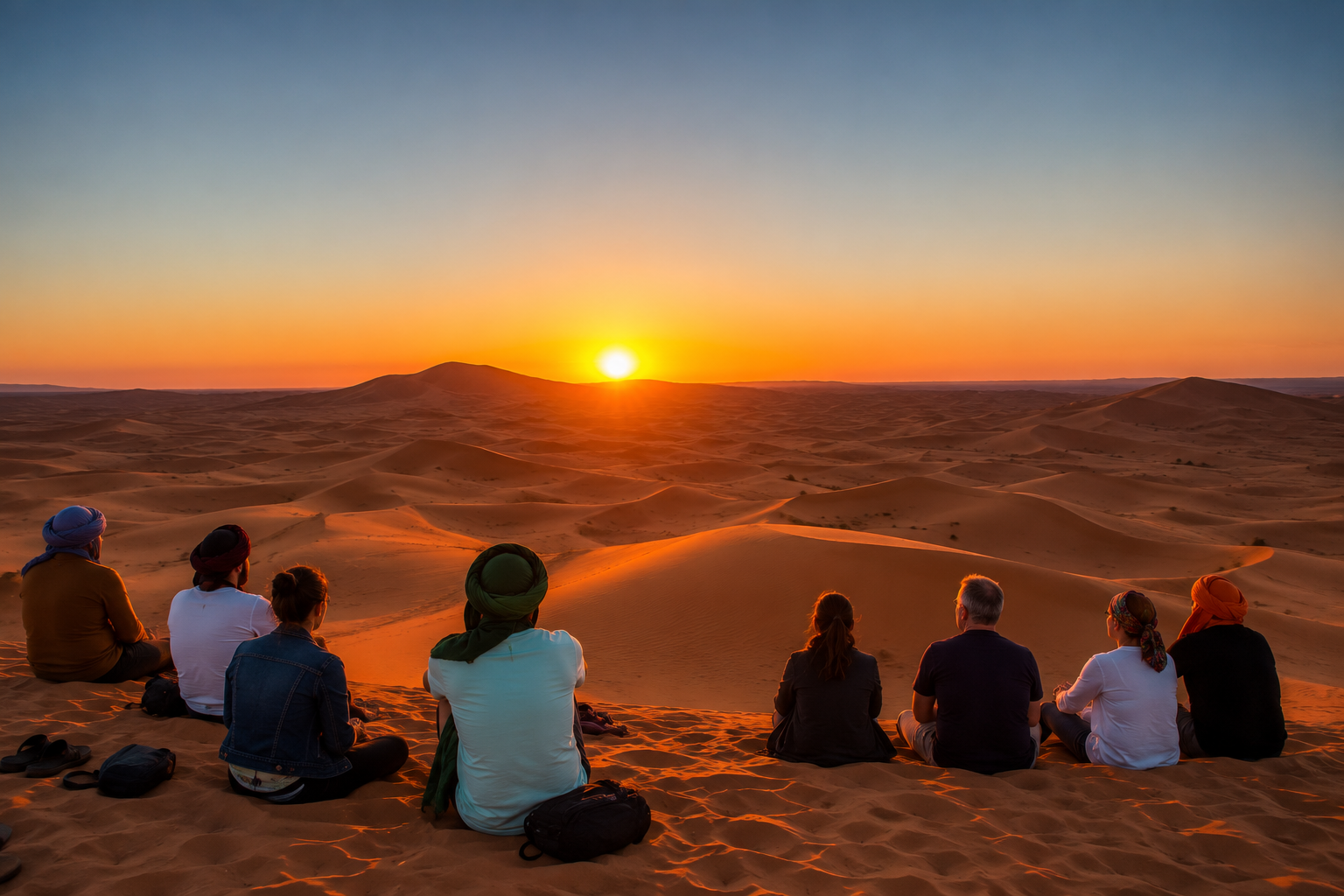
The camp is a permanent setup. Your private tent has an en-suite bathroom with a hot shower, a real bed with linens, and lighting. Dinner is around a communal table. After dinner there is Berber music around a fire, or you can walk fifteen metres into the dunes for the silence and the sky. The stars are extraordinary.
You spend the night in a private Berber tent with en-suite bathroom in the Erg Chebbi dunes. Breakfast at the Fes riad, lunch in Midelt, and dinner at the camp are included.
Sunrise over the dunes is the second reason people come. You can climb a dune for it, or stay in your tent doorway with coffee — both are valid. After breakfast at camp, you camel back to where the vehicle is waiting (or 4×4 if you took that yesterday).
The first stop is Rissani — an old Saharan trading town, the cradle of Morocco's Alaouite dynasty, and a working market town. The traditional souk runs Tuesday, Thursday, and Sunday mornings; if your travel day falls on one of those, we time the visit for the market. From Rissani we head back through Erfoud (with an optional fifteen-minute fossil workshop stop) and west through the palm groves of Tinjdad and Touroug.
Lunch is in Tinghir or in the Todgha Gorge area. The afternoon is the Todgha Gorge — limestone walls rising 300 metres above a stream. We walk the floor of the gorge for thirty to forty minutes; you set the pace. There is a tea stop at a Berber-run café in the gorge if you want one.
By late afternoon we arrive at your riad in the Dades Valley. The riad sits in the valley with a terrace that catches the last light on the canyon walls.
You spend the night in a traditional riad in the Dades Valley with an en-suite room. Breakfast at the camp, lunch en route, and dinner at the riad are included.
This is the visual day. After breakfast we leave Dades and drive the Road of a Thousand Kasbahs west. The first stop is the Skoura palmeraie, where the seventeenth-century Amridil Kasbah still stands — it is the kasbah on the back of the 50-dirham banknote, if you want a reference. We cross the Valley of Roses at Kalaat M'Gouna, which produces most of Morocco's rose water (in season, late April and early May, the air smells of it).
By late morning we reach Ouarzazate, sometimes called the Hollywood of Morocco for the film studios that have made everything from Lawrence of Arabia to Game of Thrones here. A stop at the Taourirt Kasbah on the edge of town is included; the Atlas Studios visit is optional and we will tell you honestly whether to bother.
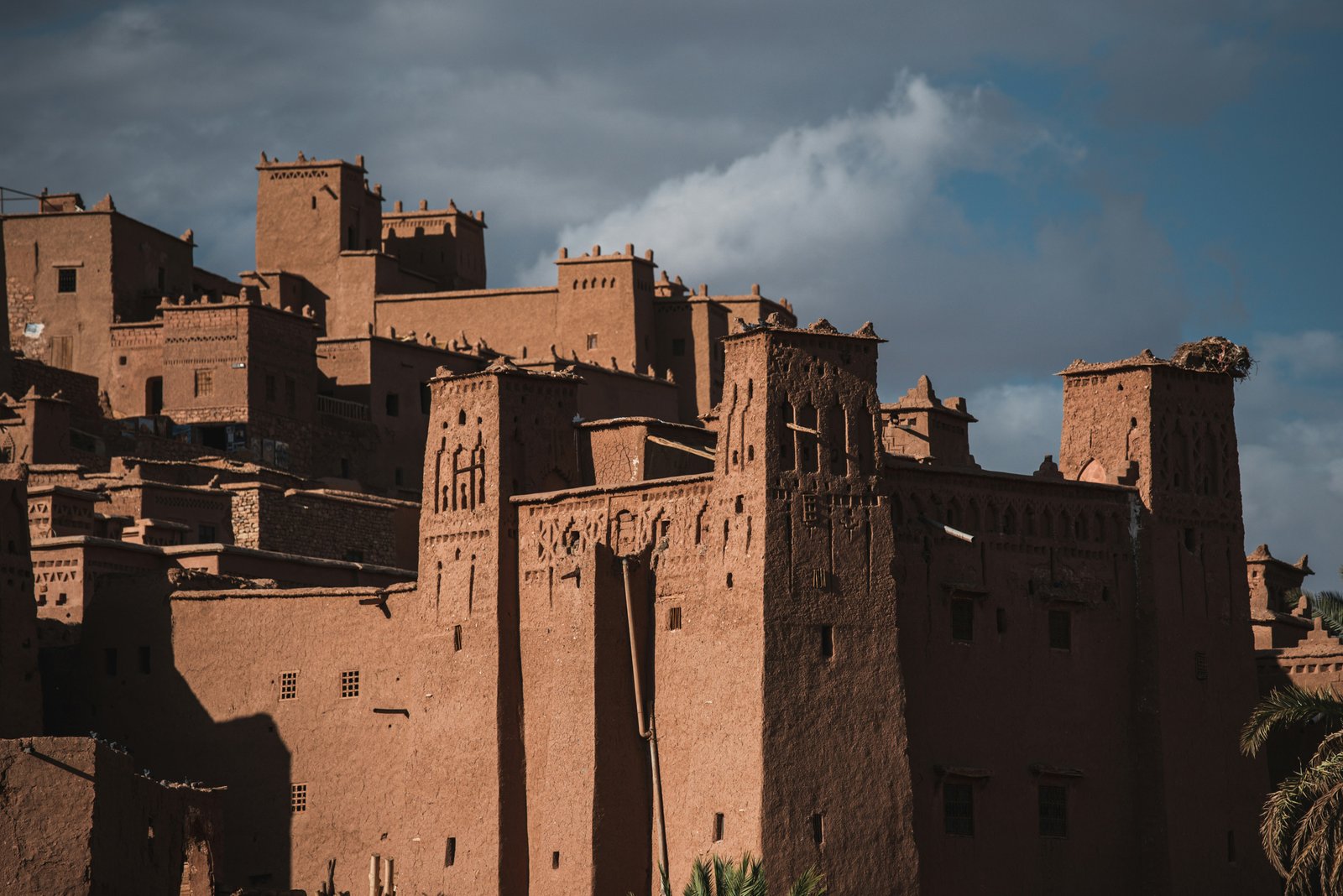
Lunch is in Ouarzazate or shortly past. The afternoon highlight is Aït Benhaddou — the UNESCO-listed earth-and-clay kasbah you will recognise from Gladiator, Game of Thrones, Lawrence of Arabia, The Mummy, and a dozen other films. We cross the riverbed (or take the bridge in winter) and walk up through the village. If you want a local guide for the kasbah itself, we arrange one for €3 per person. The view from the top — back across the village to the High Atlas behind — is one of the iconic photographs of Morocco.
From Aït Benhaddou we climb the Tizi n'Tichka pass at 2,260 metres, the highest road crossing in North Africa. The descent into Marrakech in the late afternoon takes you past Berber villages clinging to mountainsides.
We drop you at your Marrakech riad in the evening, around 5:00 to 7:00 PM.
You spend the night (and the next) in a traditional riad inside the Marrakech medina. Breakfast at the Dades riad, lunch en route, and dinner at the Marrakech riad rooftop or a nearby spot we recommend are included.
Today is yours. After six days on the road, the recovery is part of the trip — and Marrakech has earned its proper time before we head to the coast.
If you'd like a guided tour of the medina, we add a licensed Marrakech medina guide for half a day (around $60 per party) or a full day (around $120). The guide walks you through the souks (the dyer's, the carpenters', the metalworkers'), the Bahia Palace (mosaic and zellij work that takes time to read, entry 70 MAD), the Saadian Tombs (sixteenth-century burial chambers rediscovered in 1917, entry 70 MAD), and the Ben Youssef Madrasa (recently restored, entry 50 MAD).
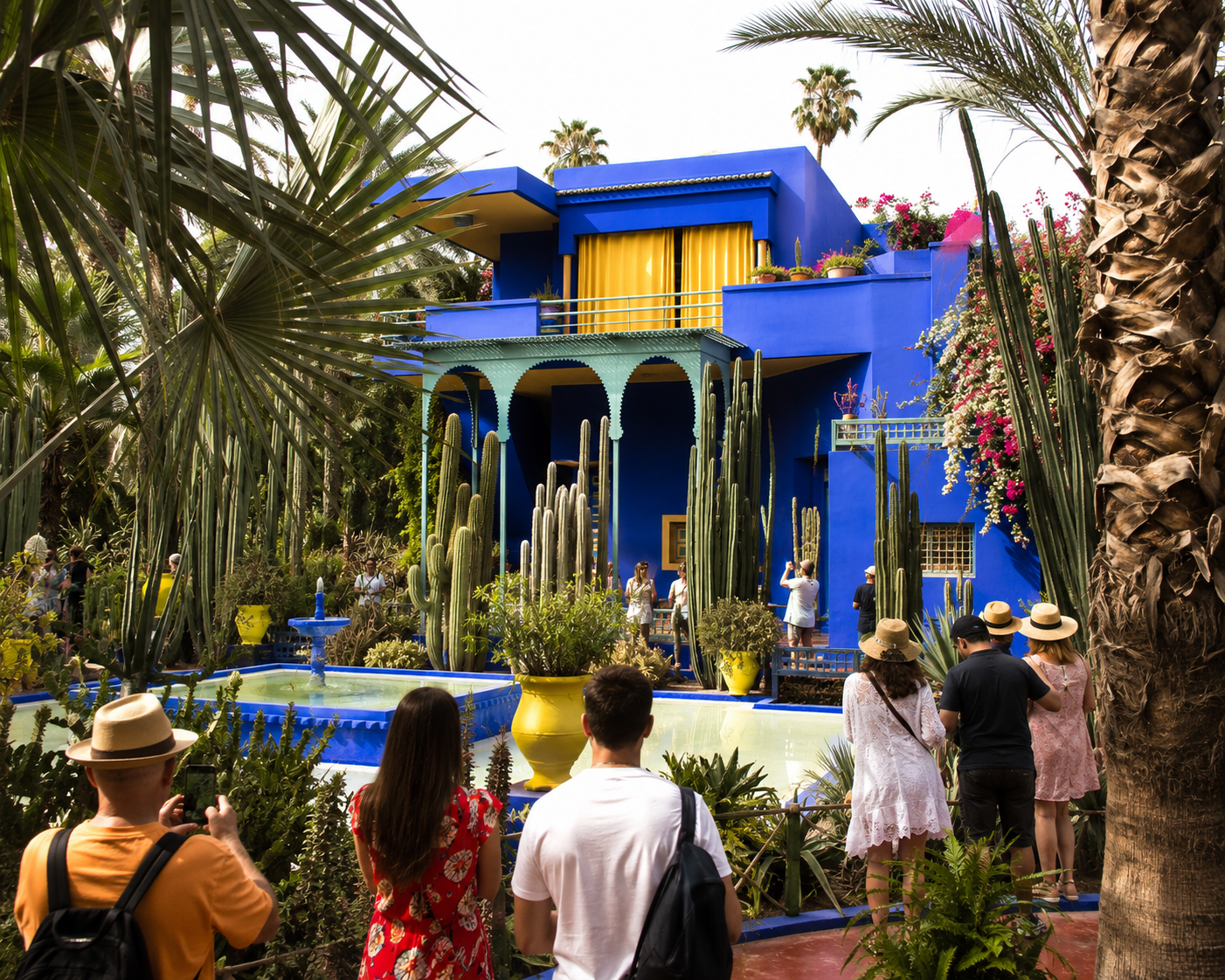
If you'd rather wander on your own, we suggest: Jemaa el-Fnaa square in the late afternoon (the snake charmers, the food stalls that appear at sunset, the storytellers), the Majorelle Garden (Yves Saint Laurent's blue garden, entry 150 MAD — book online ahead, it sells out), the Koutoubia Mosque (exterior only — closed to non-Muslims), and a hammam at one of the riads or at a public hammam your concierge recommends.
Dinner: Marrakech has the country's best food. We will pre-recommend three places at different price points. Eat well.
You spend a second night in your Marrakech riad. Breakfast is at the riad; lunch and dinner are at your own choice and pace.
Today is the coast. We collect you from your Marrakech riad at 9:00 AM (later if you want — the day is short). The drive west takes about three hours on a good road, through the argan forests of the Atlas foothills.
We stop at a women's argan oil cooperative on the way if you want one — these are working cooperatives, not tourist traps. You watch the women crack the nuts by hand and grind the kernels for oil. The oil they sell is the real thing (most "argan" oil sold in Marrakech souks is cut). A small purchase supports the cooperative and brings home something Morocco actually makes. Thirty minutes is enough.
We arrive in Essaouira at midday. The town is fortified, UNESCO-listed (the eighteenth-century Atlantic ramparts built under Mohammed III between 1760 and 1764), windswept, and famously chilled. Atlantic cold currents keep the air cooler here than inland — even in summer it rarely passes 28°C. The wind is the reason it's called the windy city, and it's the reason kitesurfers come.
Lunch is grilled fish at the harbour stalls — the catch landed that morning, you pick it from the slab and they grill it on a wood fire while you wait. About 100–150 MAD per person for a generous plate. Your driver-guide will tell you which of the stalls is the best on the day; the trick is the queue.
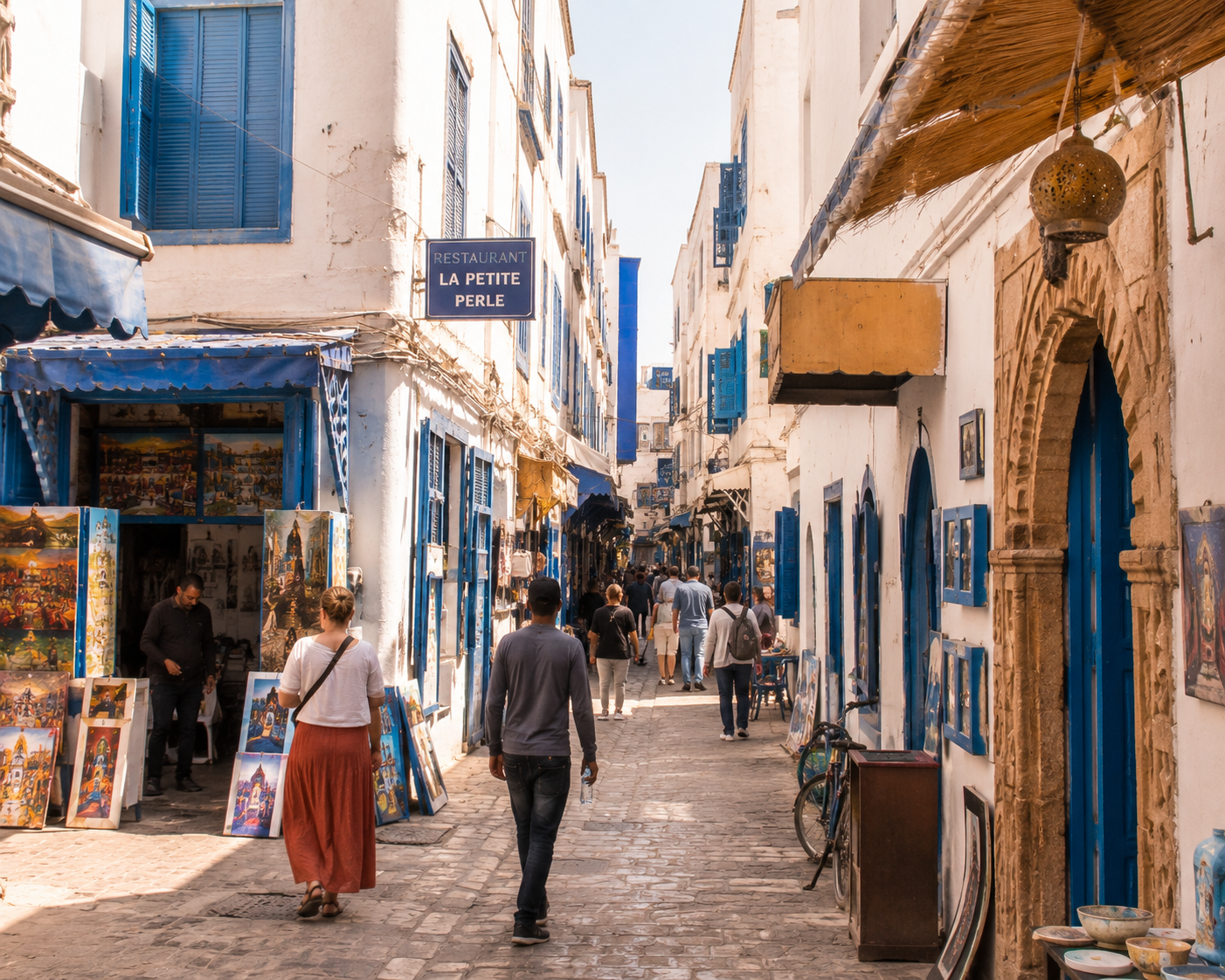
After lunch, the medina. It is small, walkable, and unaggressive — Essaouira sellers are notably gentler than Fes or Marrakech. The Skala fort (the Atlantic-facing rampart, with cannons aimed at where the Portuguese might have come from) is the photograph. The blue fishing boats lined up in the port are the second photograph. Argan oil shops, woodwork (Essaouira is famous for its inlaid thuya wood), and the old Jewish quarter (Mellah) are the wandering.
We hand you over to your riad in the late afternoon. The riad sits inside the medina; the door is marked only by its small sign. Sunset on the ramparts is at golden hour — your driver-guide will tell you when.
You spend the night (and the next) in a traditional riad inside the Essaouira medina with an en-suite room. Breakfast at the Marrakech riad is included. Lunch and dinner in Essaouira are at your own choice.
Today is yours on the coast. After eight days on the road, the recovery matters — and Essaouira is the right place for it.
The morning: harbour at sunrise (the boats are coming in with the night's catch and the gulls are working), or the long beach south of the medina (flat, windy, kitesurfers if it's May–September), or one more coffee on the ramparts. The medina is small enough to wander twice.
Optional activities your driver-guide can arrange:
— Kitesurfing lesson (350–600 MAD for half-day, 600+ for private — schools on the beach south of the medina are reputable)
— Camel ride along the beach (around 200 MAD per person, 90 minutes, runs at sunset)
— Hammam at your riad or at one of the recommended public hammams (Hammam Mounia is a longstanding favourite)
— Argan oil and thuya wood workshop visit (free to watch, you can buy if you want)
— A boat trip out to Mogador Island (the rocky outcrop in the bay, with eighteenth-century ruins and a falcon colony — restricted access, your guide arranges if interested)
Lunch and dinner: more harbour fish if you didn't eat enough yesterday. Or the small but creative restaurant scene in the medina — couscous and tagines, but also French-inflected seafood. We will have pre-recommended three places at different price points.
You spend a second night in your Essaouira riad. Breakfast is at the riad; lunch and dinner are at your own choice.
Today is short. We collect you from your Essaouira riad at a time that fits your flight — typically four hours before scheduled international departure, three hours for domestic.
If you have time before the drive, we can fit a final morning walk: the harbour at sunrise (the boats are coming in with the night's catch and the gulls are working), or one more coffee on the ramparts. Or kitesurfing if your flight is late and conditions are right.
The drive to Marrakech-Menara airport takes about three hours on the same road we came in on. We break once for fuel and a tea stop. We can drop you at the airport directly, or at a hotel in Marrakech if you have a night booked there before flying out.
We say goodbye properly. We'll take a photo at the end if you want one. Most people do.
Breakfast at the Essaouira riad is included. Lunch (motorway service or in Marrakech) is at your own expense.
If your flight is in the late evening and you want a half-day extension before the airport — coffee in Marrakech, the Bahia Palace, the Majorelle Garden, the Hassan II Mosque visit you might have skipped on Day 1 — we can arrange that. Costs depend on what you want; tell us when booking.
Includes & Excludes
What's included
Not included
Frequently Asked
Morocco has one of the lowest crime rates in the world and, compared to the US and Europe, is considered a very safe destination. Moroccan people are known for their hospitality and they will make you feel very welcomed, for more information on the topic contact us and we’ll provide you with some personal single-traveller experiences.
No. You may wear whatever you feel comfortable in, we only have one exception on tours of the Mosque like Hassan II. To enter you would need to dress conservatively as you would in a church (no shorts, tanks tops, etc.).
As in any country you should use direction with your attire if you want to avoid unwanted attention.
US Dollars, Sterling and Euros are readily exchangeable. We recommend you take a mixture of cash and credit cards. Scottish bank notes and Australian dollar travellers cheques and cash are NOT normally accepted in Morocco.
With accurate information on the schedule of your arrival, our guide and our driver await you at the customs exit at the airport, with a sign with your name and first name. It’s always easy, this appointment. In case of concern, you can contact us by phone with our contact information noted in our emails. We are always at your disposal 24 hours a day
Three things. First, it adds two nights on the Atlantic coast in Essaouira (Days 8 and 9) — the recovery the 8-day version doesn't have time for. Second, it gives Marrakech two proper nights (Days 6 and 7) instead of squeezing it in. Third, it ends in Marrakech for departure, not back in Casablanca — most travellers find Marrakech more convenient to fly out of (RAK has direct flights to most European cities, plus connecting flights through Casa). The downside: it's $300 more and two days longer, so it requires more time and budget. If you have nine days for touring and want every Morocco icon plus a coastal recovery, this is the right trip. If you have fewer days or need to fly home from Casa, do WPCHFMC8 instead.
We adjust. If you land before 11:00 AM, we visit the Hassan II Mosque and Rabat before driving to Chefchaouen. If you land between 11:00 AM and 4:00 PM, we skip the mosque and visit Rabat only. If you land after 6:00 PM, we drive directly to Chefchaouen and visit the Hassan II Mosque on Day 10 instead (if your Marrakech departure flight allows the time). Tell us your flight number when booking and we'll plan accordingly. Casablanca airport pickup is included no matter what time you arrive.
Pacing. If we put Essaouira on Days 2-3 (which some operators do), you'd start your trip relaxed on the coast, then immediately do the long demanding drives north and south through Chef, Fes, and the Sahara. The relaxation gets undone within 48 hours. Putting Essaouira at the end means you finish gentle: Day 6 long drive into Marrakech → Marrakech recovery on Day 7 → easy 3-hour coastal drive on Day 8 → coastal day on Day 9 → easy 3-hour return for airport on Day 10. The trip ends well, which is what travellers actually remember.
Day 1 about 6 hours including stops (370 km), Day 2 about 5 hours plus stops (270 km), Day 3 walking only inside Fes, Day 4 about 8 hours (470 km — the longest day), Day 5 about 5 hours (310 km), Day 6 about 7 hours (360 km), Day 7 walking only inside Marrakech, Day 8 about 3 hours (175 km), Day 9 walking only inside Essaouira, Day 10 about 3 hours (175 km). Days 3, 7, and 9 are deliberately out of the vehicle. Day 4 is the longest driving day; we offer an 11-day version with a Midelt overnight to break it if you'd prefer.
Yes. If you'd like a hotel night in Casablanca before the tour starts (good for travellers who land late and don't want to drive immediately to Chefchaouen), we arrange and book it for $80–200 per night depending on hotel tier. Tell us when booking.
Two options. Option 1: we add a Day 11 transfer back to Casablanca (3 hours by motorway, around $200 for the private vehicle) — easiest if you don't mind another driving day. Option 2: we book you a Marrakech-Casablanca flight on the morning of your departure day (~$90 per person, one hour, Royal Air Maroc or Air Arabia). If your flight from Casa is late evening, the flight option works well — you arrive Casa late morning with hours to spare. Tell us when booking and we'll arrange.
Yes — it's a small, fortified Atlantic port, UNESCO-listed for its eighteenth-century ramparts, famous for its blue fishing boats, the grilled-fish stalls in the harbour, the Skala bastion, and a notably gentler souk than Fes or Marrakech. The wind is constant; even in summer it rarely passes 28°C. Travellers who like it describe it as "Tangier without the chaos." Travellers who don't find it underwhelming. If you want a high-energy ending to your Morocco trip, Essaouira is not it; that's why it's at the end after the demanding grand tour, not the start. Two nights gives you afternoon Day 8 + full Day 9 + morning Day 10 — enough to wander twice and do an optional activity (kitesurfing, hammam, beach camel ride).
Different from inland Morocco. The grilled-fish stalls in the harbour are the experience: walk past the stalls, pick a fish from the iced slab (sea bream, sardines, monkfish, octopus, sometimes lobster), they grill it on a wood fire while you wait. About 100–150 MAD per person for a generous plate. The catch and quality vary day-to-day; your driver-guide will tell you which stall is best on the day. Beyond the harbour, Essaouira has a small but creative restaurant scene — couscous and tagines, but also French-inflected seafood. We pre-recommend three places at different price points.
No. If you would rather not ride, we transfer you to camp by 4×4 — same camp, same dinner, same view. Mention it when booking.
March to May and September to November are ideal — mild days everywhere, warm desert nights, predictable weather on the coast. June to August is very hot in the desert and in Fes (40°C and above); we run the tour but recommend an air-conditioned tent upgrade. The Atlantic coast in Essaouira stays cool year-round (rarely above 28°C), which is part of why people like it. December to February has cold nights in the desert and in Chefchaouen (which sits at 600 metres); some travellers love that, but pack warm layers. Essaouira in winter is windy and grey — beautiful in a different way, but the kitesurfing season is closed.
We run the tour normally. The Hassan II Mosque visit is closed to non-Muslims in the afternoon during Ramadan — we shift it to morning. Riad meals run on a slightly later evening schedule (dinner around iftar at sunset, which is convenient because that's when the medina comes alive). Lunch options are limited in the cities (most local restaurants close in daylight) but tourist-facing places stay open. The Essaouira fish stalls run normally. Your driver-guide will fast or not depending on their preference; either way, they will not eat or drink in front of you, but you absolutely can. Tell us when booking and we'll plan around the dates.
Yes — that is the point of private. Common customisations: extending Essaouira to three full days (drops a Marrakech night to balance), adding a Casablanca pre-tour night, swapping standard riads for luxury heritage properties, adding a hot air balloon over the High Atlas on Day 7 morning, adding a cooking class in Fes evening of Day 3, adding an Atlas Mountains hike from Marrakech on Day 7 (replaces the city free day). Tell us when you enquire.
Through our website with PayPal, or via WhatsApp (+212 628 848 511) for a custom quote. We confirm within 12 hours during Morocco business hours. A 25% deposit secures your dates; the balance is paid in cash to your driver on Day 1, or in advance via PayPal. Free cancellation up to 28 days before departure (this trip holds riad rooms across six cities ahead, so the window is longer than our shorter trips).