


Overview
Three days. Two nights. The Atlas Mountains, the Road of a Thousand Kasbahs, and a camp on the edge of Erg Chebbi where the only light at midnight is the Milky Way.
This is the route Morocco Way has been refining since 2014. We leave Marrakech early, climb the Tizi n'Tichka pass, stop where it's worth stopping, and skip the places everyone else stops just because the bus tours do. By the second evening you're on a camel walking into the dunes, and that night you sleep in a Berber camp with a real bed, a hot dinner, and a guide who grew up close enough to call this landscape home.
Everything is private. Your driver-guide is yours alone — no shared minibus, no fixed group, no one rushing you back to the vehicle. We adjust the day to suit your pace. If you want longer at Aït Benhaddou, take longer. If the Todgha Gorge isn't your thing, we spend more time in Dades. If you'd rather skip the camel and arrive at camp by 4×4, that's already arranged.
Best for: travellers who want the Sahara without the group-tour compromise. Couples, families with older children, photographers, friends, and anyone for whom three days is the time they have. If you have four or five days, ask us — the route gains a lot from an extra night in the desert.
Not the right fit if: you can't sit in a vehicle for five to seven hours a day. Morocco's south is genuinely far from Marrakech. The drive is part of the experience, but it's still a drive. We're honest about this so you book the right trip.
Day by Day
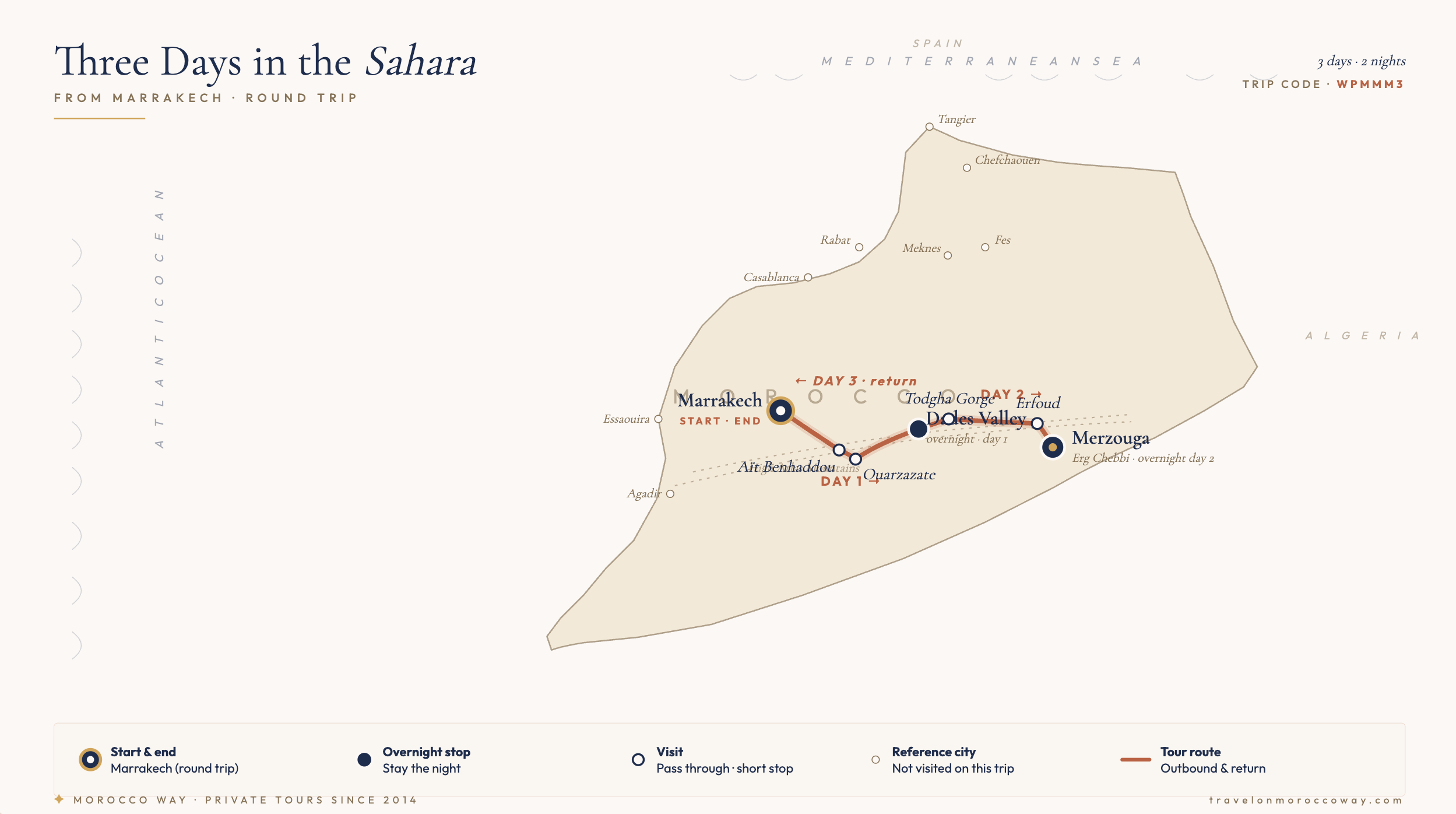
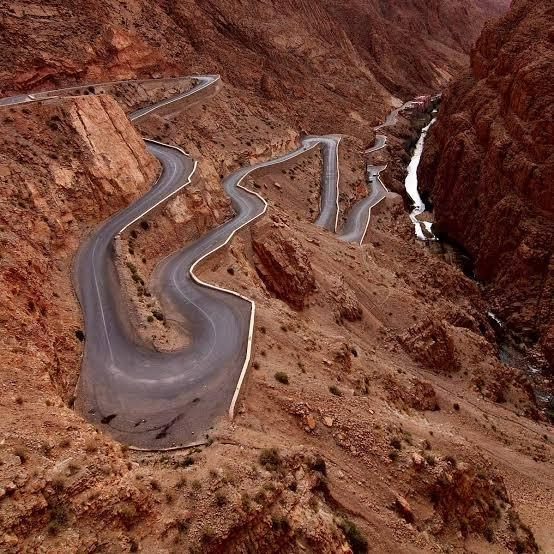
We collect you from your hotel or riad in Marrakech at 8:00 AM. The first hour leaves the city behind and starts climbing — within ninety minutes you are in the High Atlas, on the Tizi n'Tichka pass at 2,260 metres. We stop where the views are best, not where the cafés are biggest. You will see Berber villages clinging to mountainsides and, depending on the season, snow on the higher peaks.
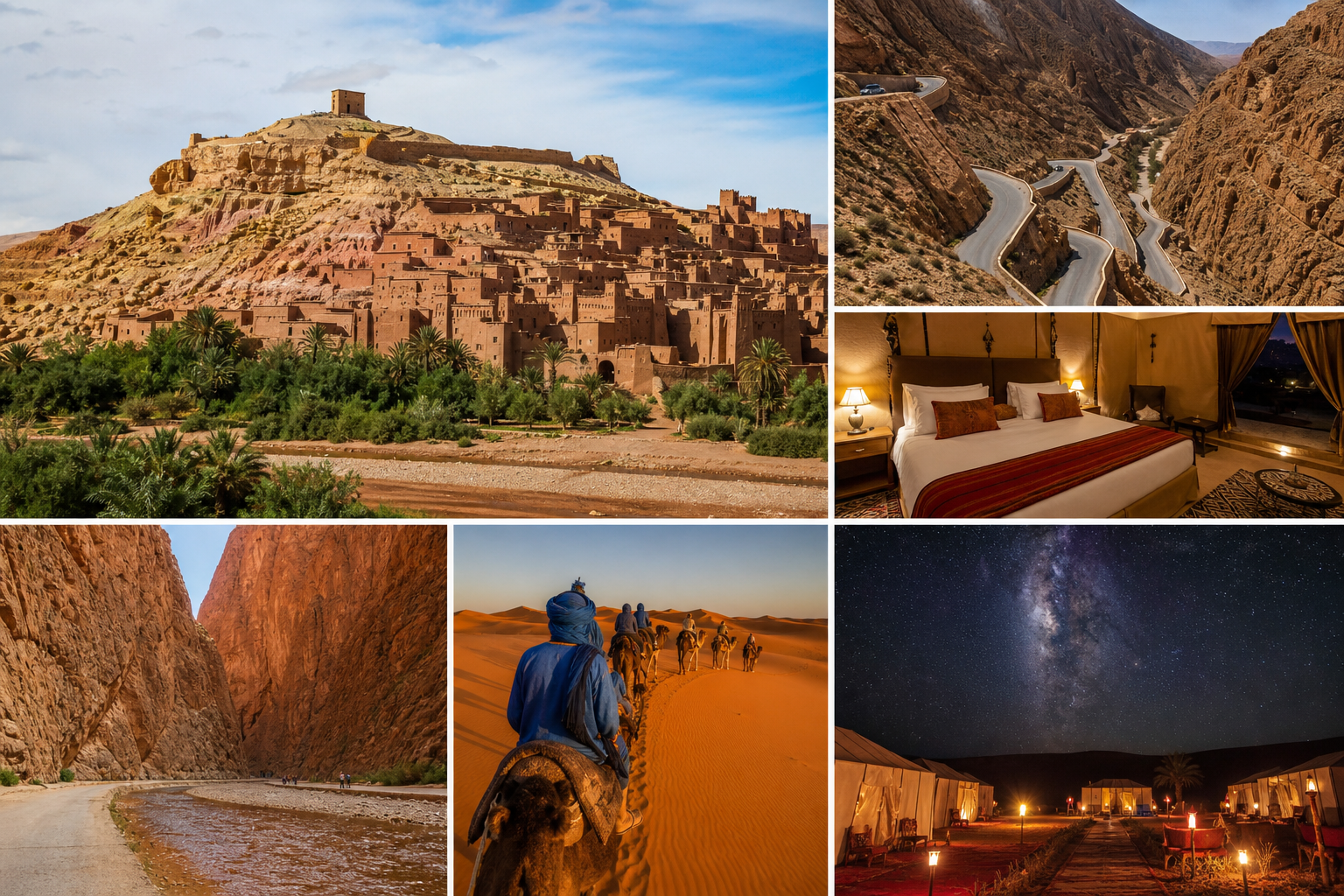
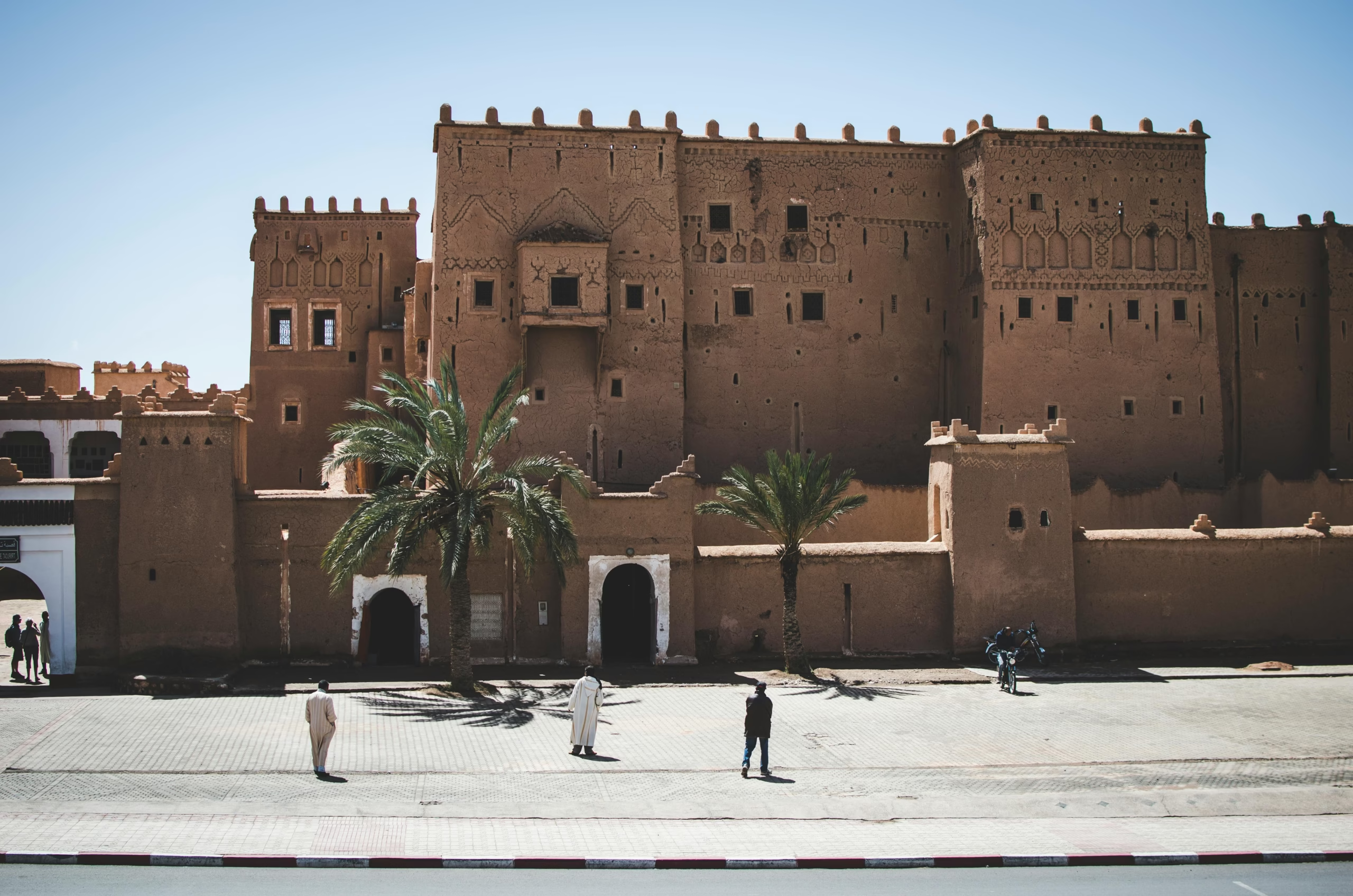
The first big stop is Aït Benhaddou, the UNESCO-listed earth-and-clay kasbah you will recognise from Gladiator, Game of Thrones, Lawrence of Arabia, and a dozen other films. We cross the riverbed (or take the bridge in winter) and walk up through the village. If you want a local guide for the kasbah itself, we arrange one for €3 per person. Lunch is in a family-run spot we trust.
The afternoon takes the Road of a Thousand Kasbahs through Ouarzazate (Atlas Studios is optional — most travellers skip it; we will tell you honestly whether to bother), past the Skoura palmeraie and the Valley of Roses at Kalaat M'Gouna. We arrive in Boumalne Dades in the late afternoon. Your riad sits in the valley with a terrace that catches the last light on the canyon walls.
Accommodation: Traditional riad in Dades Valley (en-suite room, private bathroom)
Meals included: Dinner
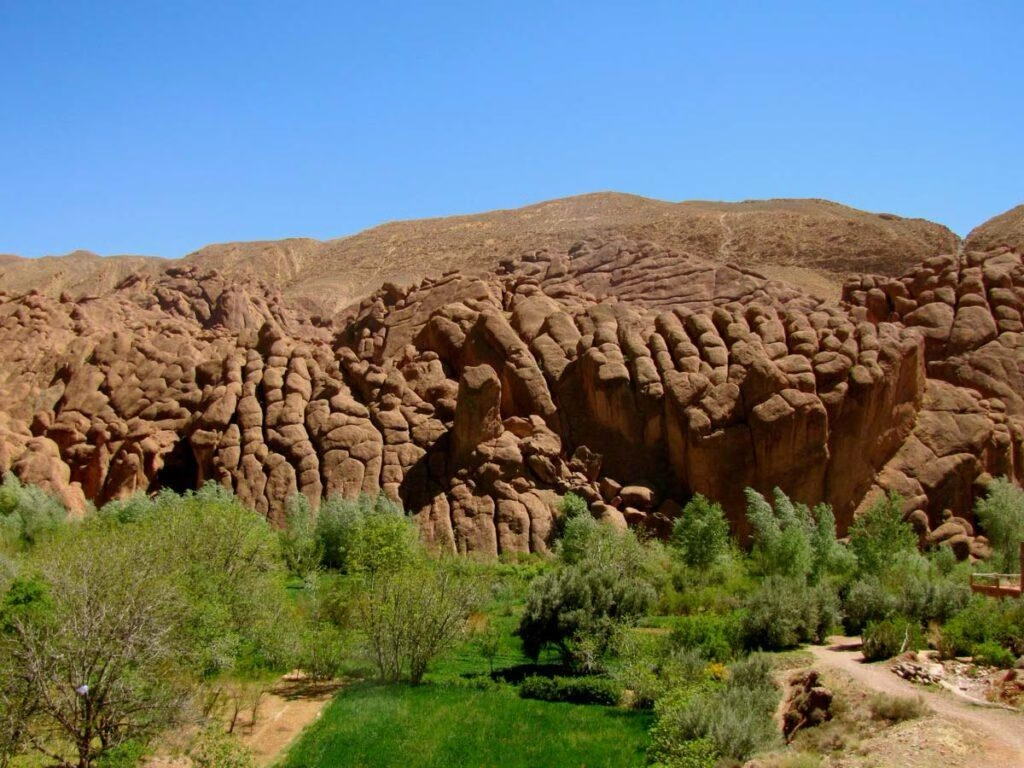
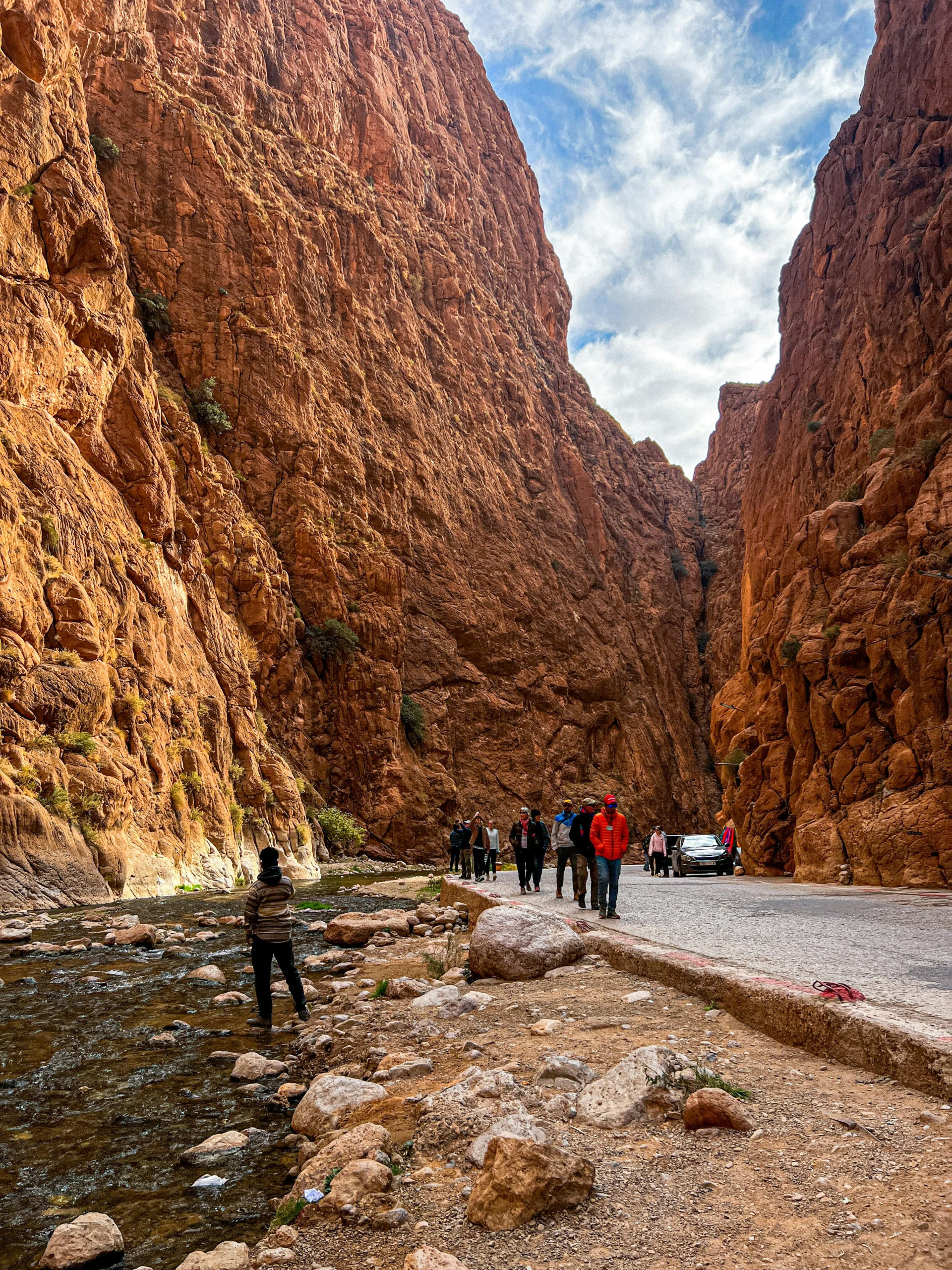
After breakfast we head east to Tinghir and the Todgha Gorge — limestone walls rising 300 metres above a stream. We walk the floor of the gorge for thirty to forty minutes; you set the pace. There is a tea stop at a Berber-run café in the gorge if you want one.
Lunch is in Tinghir or en route — your driver knows the family kitchens that don't show up on Google. The afternoon drive crosses the high desert: Tinjdad, Erfoud (the fossil town), and then the road opens out and the dunes appear on the horizon. That moment — when the Sahara stops being an idea and starts being a thing on the windscreen — is one of the reasons people come.
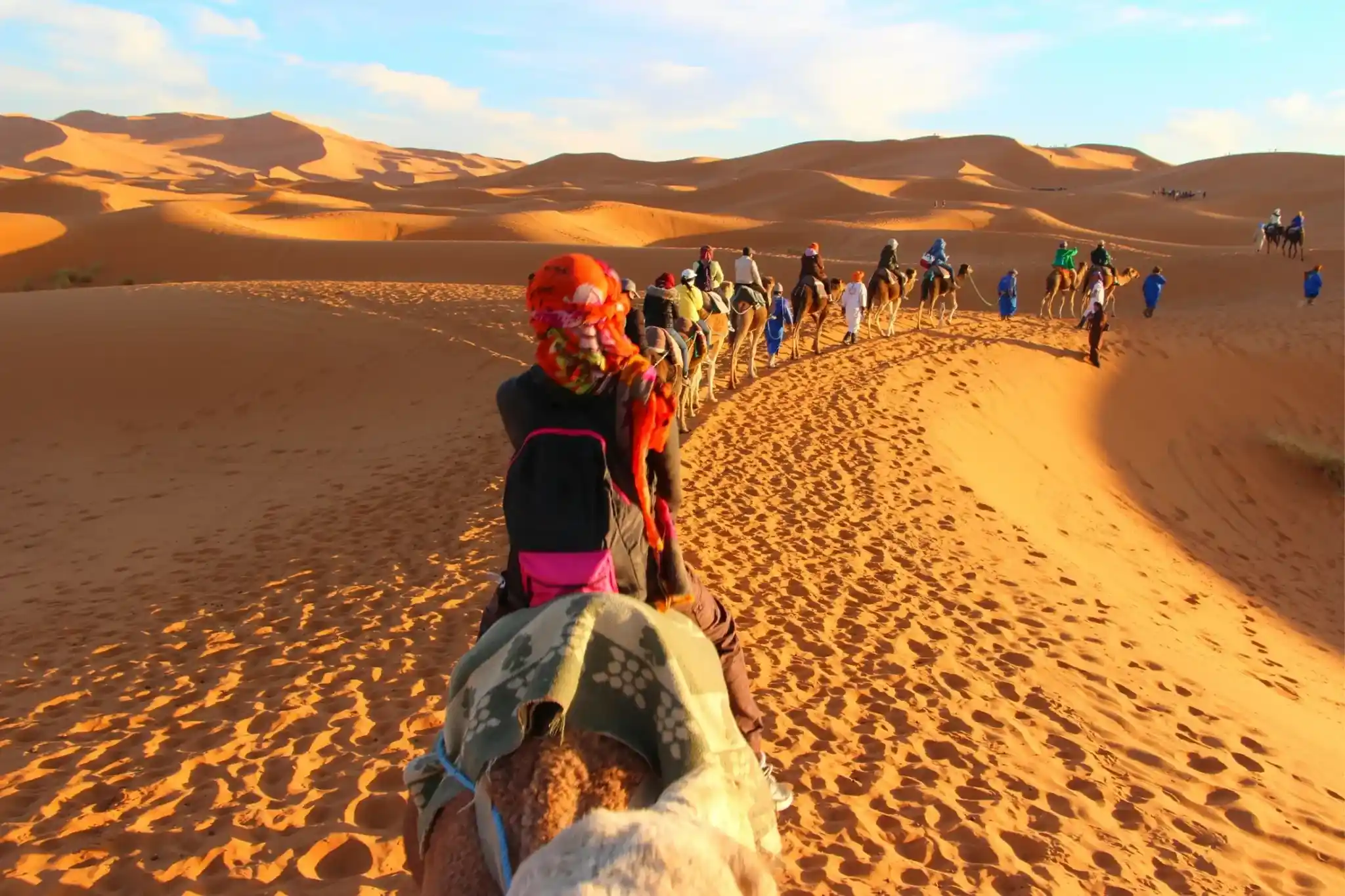
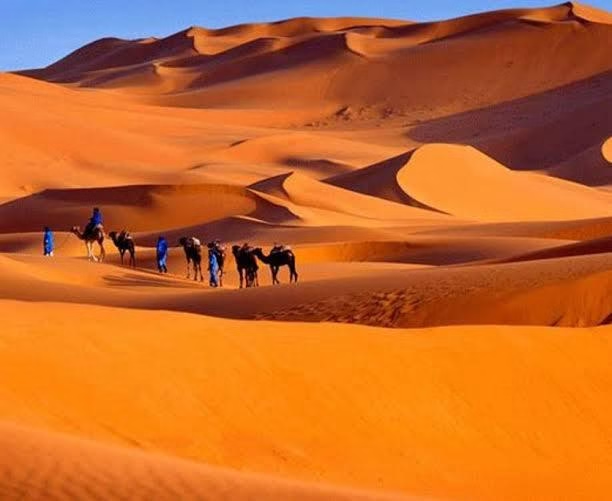
We arrive at the edge of Erg Chebbi in the late afternoon and switch from the vehicle to the camel. The trek into the dunes takes about an hour. If you would rather not ride a camel, we drive you to camp in a 4×4 — same camp, no negotiation needed. The sunset from the top of a dune is what it is. Bring your phone.
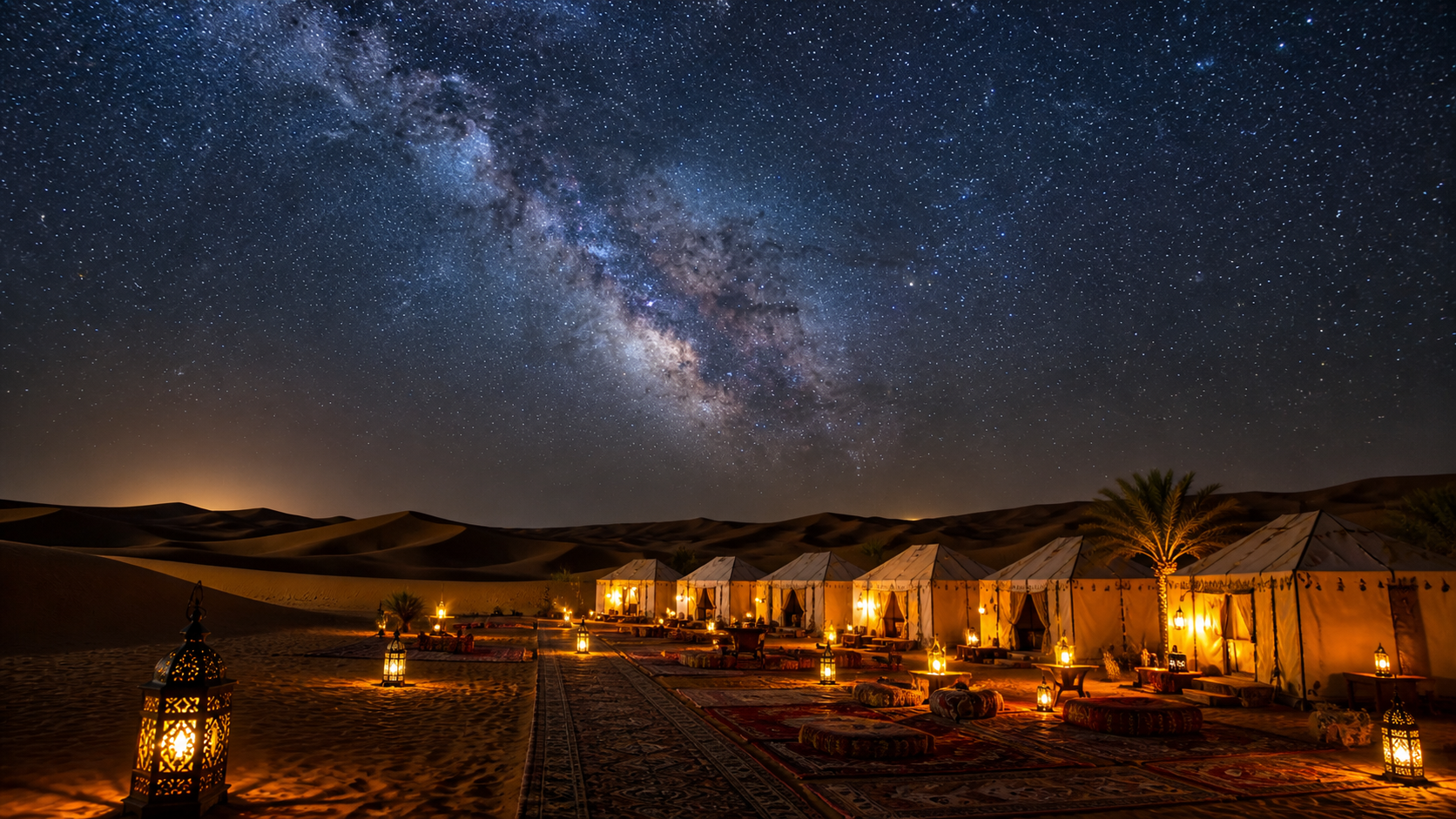
The camp is a permanent setup, not a tent in the sand. Each tent has a private bathroom with a hot shower, a proper bed with linens, and lighting. Dinner is around a communal table — Moroccan, hot, and good. After dinner there is Berber music around a fire, or you can walk fifteen metres into the dunes for the silence and the sky.
Accommodation: Berber desert camp in Erg Chebbi (en-suite tent with private bathroom, hot shower, real bed)
Meals included: Breakfast, lunch, dinner
Description:
Sunrise over the dunes is the second reason people come. You can climb a dune for it, or stay in your tent doorway with coffee — both are valid. After breakfast, camel back to where the vehicle is waiting (or 4×4 if you took that yesterday).
The return is the long day — there is no way around the geography. We take the same Atlas route back through Ouarzazate, with a different stop or two so you don't see the same views twice. Lunch is at a place we will suggest in Ouarzazate. By late afternoon you are climbing the Tizi n'Tichka in the opposite direction; if the light is right, this is a different mountain than the one you saw on Day 1.
We drop you at your Marrakech hotel or riad around 6:00 to 7:00 PM. We will take a photo at the end if you want one. Most people do.
Accommodation: None (return to your Marrakech accommodation)
Meals included: Breakfast
Includes & Excludes
What's included
Not included
Frequently Asked
Morocco has one of the lowest crime rates in the world and, compared to the US and Europe, is considered a very safe destination. Moroccan people are known for their hospitality and they will make you feel very welcomed, for more information on the topic contact us and we’ll provide you with some personal single-traveller experiences.
No. You may wear whatever you feel comfortable in, we only have one exception on tours of the Mosque like Hassan II. To enter you would need to dress conservatively as you would in a church (no shorts, tanks tops, etc.).
As in any country you should use direction with your attire if you want to avoid unwanted attention.
US Dollars, Sterling and Euros are readily exchangeable. We recommend you take a mixture of cash and credit cards. Scottish bank notes and Australian dollar travellers cheques and cash are NOT normally accepted in Morocco.
With accurate information on the schedule of your arrival, our guide and our driver await you at the customs exit at the airport, with a sign with your name and first name. It’s always easy, this appointment. In case of concern, you can contact us by phone with our contact information noted in our emails. We are always at your disposal 24 hours a day
A: Day 1 is about 7 hours, Day 2 about 6 hours plus a camel trek, Day 3 is the long day at around 9 hours including stops. We break every 1.5 to 2 hours. The drive is part of the experience — Morocco's south is genuinely far from Marrakech, and there is no shortcut.
A: No. If you would rather not ride, we transfer you to camp by 4×4 — same camp, same dinner, same view. Mention it when booking.
A: Yes. Each tent has a real bed with linens, a private bathroom, and a hot shower. Lighting is solar. Dinner is around a communal table. It is not a hotel, but it is not roughing it.
A: Children from around six years old usually love the dunes and the camel ride. For younger children, the long driving days can be hard — we can suggest a slower itinerary instead. All ages can travel on this tour; we fit child seats if needed.
A: Light layers (warm clothes for desert evenings even in summer), closed walking shoes, sunglasses, sun cream, a scarf for sand and sun, a power bank, and a small overnight bag. Your main suitcase stays in the vehicle. We send a detailed packing list when you book.
A: Very. The camps are staffed overnight, well-lit, and located in a protected area of Erg Chebbi. Our office in Marrakech is available 24/7 if anything comes up.