
Your Ultimate Guide to Experiencing Morocco’s Most Iconic Ritual
Pouring Poetry in a Copper Pot
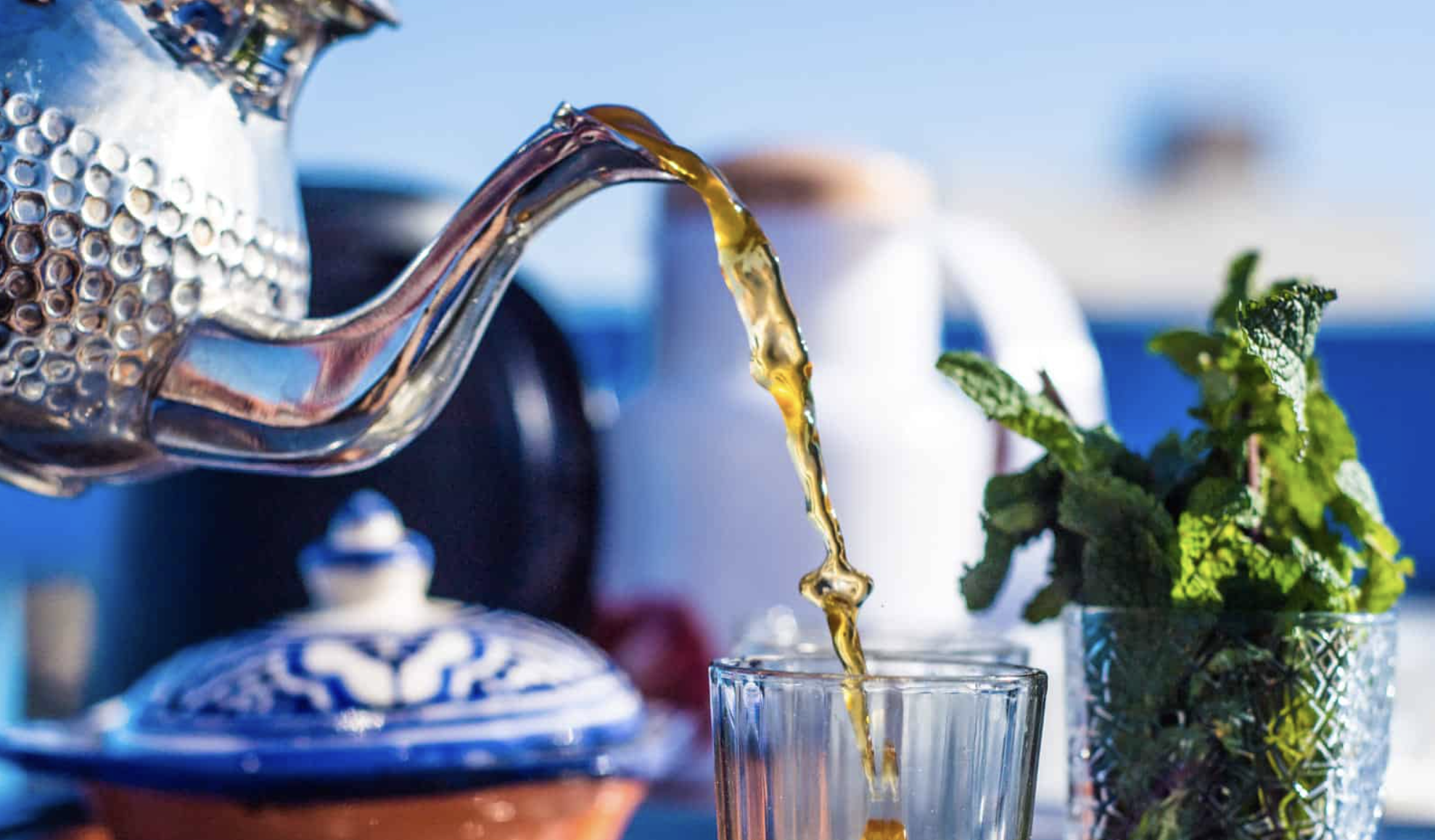
Picture this: golden afternoon light in Marrakesh, the scent of orange blossom drifting through a riad courtyard, and a waiter lifting a gleaming silver teapot high above his head. A slender, graceful stream of amber liquid arcs through the air, landing with a gentle hiss into a tiny glass. And then—magic—a crown of delicate foam blooms on top.
This isn’t just tea. This is Moroccan hospitality in liquid form.
If you’re planning a trip to Morocco , experiencing authentic atay bina’naa—Moroccan mint tea—is non-negotiable. It’s woven into every welcome, every celebration, every moment of pause. And thanks to centuries of refined craft (and a dash of fluid dynamics), it’s an experience that delights the senses and the curious mind.
Why the Foam? It’s Not Just for Show
That fluffy, beer-like head on your Moroccan tea isn’t accidental. It’s intentional—and brilliantly practical.
🏜️ Desert-Tested Design
Legend says the foam served as a natural sand filter for nomads crossing the Sahara. Wind-blown grains would get trapped in the bubbles, letting you sip the clean, sweet tea beneath. Blow the foam away, or drink carefully—the liquid stays pure.
🔬 The Science of the Sip
But here’s where it gets deliciously nerdy. That foam exists because of:
- Saponins: Natural compounds in green tea that act like gentle surfactants (yes, soap-like molecules!)
- Sugar: Loads of it! Increases viscosity so bubbles last longer
- Fresh mint: Essential oils from real peppermint leaves stabilize the foam even further
The result? A glossy, long-lasting head that signals: “This tea was made with care, fresh ingredients, and respect.” No dried mint shortcuts here.
The Teapot: A Masterclass in Invisible Engineering
Hold a traditional Moroccan teapot (bkir) and you’re holding centuries of iterative genius. No CAD software. No physics equations. Just generations of tea-lovers refining a design until it just worked.
Why the S-Shaped Spout Matters
That elegant curve isn’t decorative—it’sfluid dynamics in action:
✅ Low-set spout: Draws tea from the bottom where flavor and pressure are strongest
✅ Tapering design: Accelerates the pour using the Venturi effect (hello, Bernoulli!)
✅ S-curve: Straightens turbulent flow into a clean, laminar stream
✅ Sharp lip: Prevents dripping—solved by Moroccan artisans centuries before Nobel-winning physicists “discovered” it
✅ Low-set spout: Draws tea from the bottom where flavor and pressure are strongest
✅ Tapering design: Accelerates the pour using the Venturi effect (hello, Bernoulli!)
✅ S-curve: Straightens turbulent flow into a clean, laminar stream
✅ Sharp lip: Prevents dripping—solved by Moroccan artisans centuries before Nobel-winning physicists “discovered” it
The payoff? You can pour from waist-high (or higher!) without splashing. The tea cools mid-air to the perfect sipping temperature, and that signature foam forms effortlessly.
“This teapot is the whole world in a vessel: thermodynamics, botany, culture, and joy—all steeped together.”
More Than a Drink: The Ritual of Connection
In Morocco, tea isn’t consumed—it’s shared. And the ritual matters as much as the recipe.
The Three-Pour Tradition
Authentic Moroccan tea is poured three times, each with symbolic meaning:
- First pour: “As bitter as life” (strong, bold)
- Second pour: “As sweet as love” (balanced, smooth)
- Third pour: “As gentle as death” (light, fragrant)
Refusing a glass? Rarely an option. Accepting is accepting friendship.
Where to Experience It Authentically
✅ Marrakesh riads: Intimate courtyards with expert pourers
✅ Desert camps: Under the stars, foam catching moonlight
✅ Local homes: The ultimate honor—ask your guide!
✅ Cafés in the Medina: Watch masters work while people-watching
✅ Desert camps: Under the stars, foam catching moonlight
✅ Local homes: The ultimate honor—ask your guide!
✅ Cafés in the Medina: Watch masters work while people-watching
Pro tip: The higher the pour, the more skilled the server. And the more foam? The better the welcome.
Final Sip: Why This Ritual Belongs on Your Bucket List
Moroccan mint tea is more than a beverage. It’s:
✨ A living link to Berber and Arab traditions
✨ A masterclass in sustainable, intuitive design
✨ A sensory journey—sweet, herbal, aromatic, warm
✨ An invitation to slow down and connect
✨ A living link to Berber and Arab traditions
✨ A masterclass in sustainable, intuitive design
✨ A sensory journey—sweet, herbal, aromatic, warm
✨ An invitation to slow down and connect
When you sip that first foamy glass in a sun-drenched Marrakesh courtyard, you’re not just tasting mint and sugar. You’re tasting centuries of wisdom, hospitality, and human ingenuity.
And honestly? That’s worth the trip alone.
Ready to experience Morocco?
👉 Explore our curated Morocco itineraries
👉 Book a cultural immersion tour
👉 Explore our curated Morocco itineraries
👉 Book a cultural immersion tour
Got questions about Moroccan culture, food, or travel? Drop them below—we love helping fellow wanderers plan unforgettable journeys.Contact Us
test